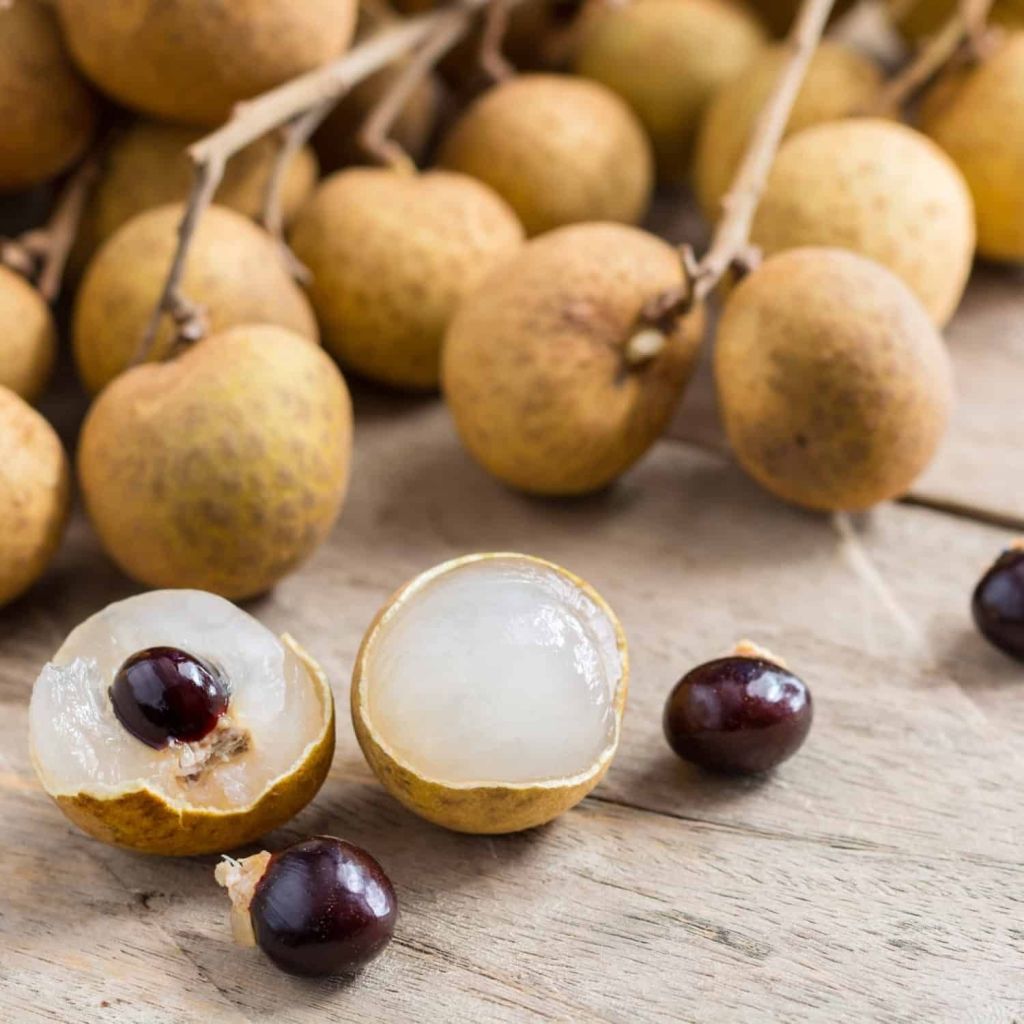
Longan (Dimocarpus longan), also called “dragon’s eye,” is a tropical/subtropical fruit closely related to lychee and rambutan. Growing longan from a seed is absolutely possible—but patience is key. Seed-grown trees typically take 4–7 years to fruit.
This guide takes you through every stage clearly.
—
🥭 1. Choosing & Preparing the Seed
✔ Pick the right fruit
Choose a fresh, fully ripe longan (not refrigerated for weeks).
Seeds must be fresh—they lose viability quickly.
✔ Remove and clean the seed
1. Eat or remove the fruit flesh.
2. Rinse the seed under water to remove all pulp.
3. Optional: Lightly scratch the seed coat with fine sandpaper to speed germination.
✔ Prevent mold
Soak the seed in clean water for 12–24 hours before planting.
—
🌱 2. Germinating the Seed
Method A — Paper Towel Method (Fastest)
1. Wrap the seed in a damp (not dripping) paper towel.
2. Place in a plastic bag with air pockets.
3. Keep warm: 75–90°F (24–32°C).
4. Check daily; re-moisten if needed.
Germination time: 7–14 days
(You’ll see a root emerge.)
Method B — Direct Potting
1. Fill a pot (1–2 gallon) with well-draining mix:
50% potting soil
30% perlite
20% compost
2. Plant the seed 1 inch deep.
3. Water lightly and keep in warm shade.
—
🌿 3. Growing Seedlings (0–6 months)
Pot placement
Bright indirect light at first.
After 2–3 weeks, move to partial sun.
Protect from strong wind and heavy rain.
Water
Keep soil slightly moist, never soaked.
Longan is sensitive to root rot early on.
Fertilizer
After 6 weeks, use a diluted balanced fertilizer (e.g., 10-10-10) monthly.
Or top-dress lightly with compost.
Growth expectation
At 3 months: 6–10 inches tall
At 6 months: 1–2 feet tall
—
🌳 4. Transplanting to Ground (6–12 months)
Transplant when the seedling is sturdy and roots fill the pot.
Ideal planting site
Full sun (6–10 hours)
Warm, frost-free climate
Well-drained soil
pH 6.0–7.0
Planting steps
1. Dig a hole twice the width of the pot.
2. Mix native soil with 20–30% compost.
3. Plant at the same depth as the pot level.
4. Water thoroughly.
5. Mulch with 2–3 inches of wood chips (keep mulch 6 inches away from the trunk).
—
🌦 5. Care During Years 1–3
Watering
Deep water once or twice weekly in dry periods.
Allow soil to dry slightly between waterings.
Fertilizing schedule
Year 1–2:
3–4 feedings per year of a balanced fertilizer (8-3-9, 10-10-10, or citrus fertilizer).
Year 3+:
Increase potassium to support fruiting (e.g., 0-0-22 or high-K blends).
Pruning
Remove low branches.
Shape the tree to have a single trunk and open canopy.
Avoid heavy pruning—longan fruits on new growth from older wood.
Cold protection
Below 32°F (0°C) can damage young trees.
Use blankets, frost cloth, or small heat sources if necessary.
—
🌼 6. Flowering (Years 4–7)
Seed-grown longans begin flowering when:
Tree is 4–10 feet tall
Climate has distinct dry periods
Tree is mature enough (usually 4–7 years)
To encourage flowering:
Provide a dry period for 1–2 months (minimal watering).
Reduce nitrogen temporarily.
Increase sunlight exposure.
Longans typically flower in late winter–spring depending on climate.
—
🍇 7. Fruiting & Harvest
Fruit development
After flowering, small fruit clusters form.
Fruit matures in 4–6 months.
Care during fruiting
Keep soil evenly moist.
Apply a high-potassium fertilizer (e.g., 0-0-22).
Protect from heavy winds (fruit clusters are delicate).
Harvest
Harvest when fruit is:
Fully brown
Sweet, aromatic
Slightly soft when squeezed
Cut whole clusters with pruners for best quality.
—
🕒 Timeline Summary
Stage Time
Germination 1–2 weeks
Seedling 3–6 months
Transplanting 6–12 months
Juvenile stage 1–3 years
First flowers 4–7 years
First fruit 4–7+ years
—
🌱 Extra Tips
Longans love heat, humidity, and full sun.
Avoid overfeeding with nitrogen → causes leaf growth but no fruit.
If you live in a cooler climate, longans do great in large containers (20–30 gallons).
Mulch helps retain soil moisture and improves soil life.
Seed-grown trees vary genetically → fruit may differ from the parent. Sometimes better!
 Arbuckle Creek
Leave a comment