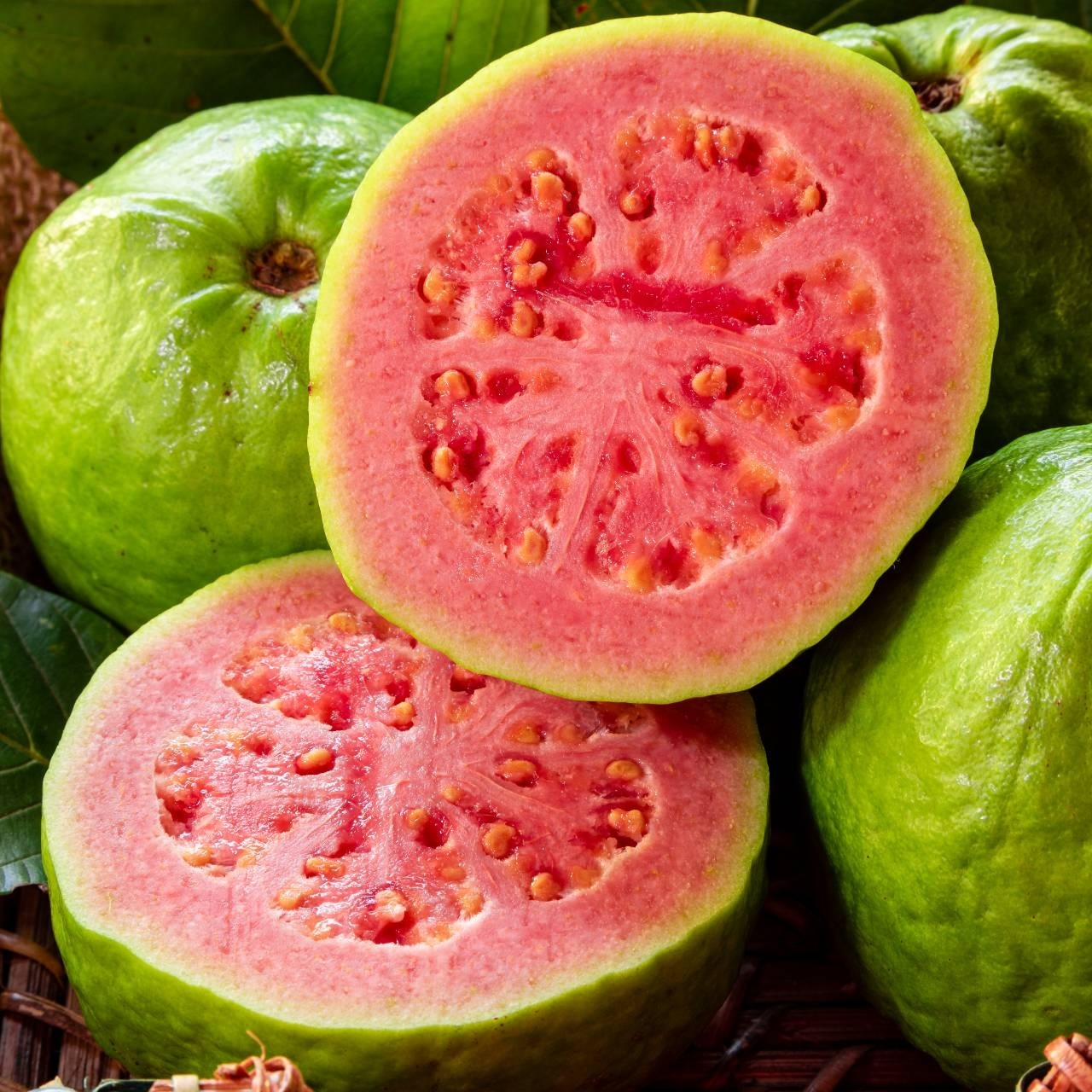

A Complete Central Florida Guava Growing Guide
Guava is one of the more interesting tropical fruit trees for Central Florida gardeners. It grows quickly, can produce flavorful fruit, and can be maintained at a manageable size with proper pruning.
For homeowners, guava also has another advantage: you don’t necessarily need a large property to grow it. A well-positioned tree can provide a surprising amount of fruit while also giving you an opportunity to experiment with selling fresh fruit, plants, or cuttings.
But growing guava successfully in Central Florida isn’t simply a matter of planting a tree and waiting.
Heat, sandy soils, heavy rainfall, occasional freezes, insects, and proper nutrition all affect the tree’s performance.
This guide covers how to grow guava in Florida from planting through harvesting, including varieties, propagation, pruning, cold protection, pests, fruit production, and the potential for selling your harvest.
—
Can You Grow Guava in Central Florida?
Yes. Guava can grow well in Central Florida when planted in a warm, sunny location with good drainage.
Guava is adapted to warm conditions and can tolerate periods of dry weather once established. However, drought can reduce growth and fruit production, while prolonged wet soil can increase the risk of root problems.
Central Florida gardeners should also take winter temperatures seriously. Young guava trees are considerably more vulnerable to cold than established trees, so location and cold protection can make a major difference.
A protected location near a building, fence, or other heat-retaining structure can be useful during occasional cold events.
If your property regularly experiences freezing temperatures, consider growing a smaller tree in a container or having a practical cold-protection plan for young plants.
—
What Is Guava?
Guava is the fruit of Psidium guajava, a tropical fruit tree in the myrtle family.
The fruit varies considerably depending on the variety.
Guavas can have:
– White flesh
– Pink flesh
– Red or reddish flesh
– Sweet or mildly acidic flavor
– Soft or relatively firm flesh
– Smooth or slightly textured skin
Some guavas are primarily eaten ripe and soft, while certain white-fleshed types can also be eaten while still firm.
Guava is also extremely versatile in the kitchen.
Fresh guava can be used in:
– Smoothies
– Juices
– Jams
– Jellies
– Sauces
– Desserts
– Salads
– Salsas
– Marinades
– Savory dishes
That versatility can become important if you eventually grow more fruit than your household can use.
—
Best Guava Varieties for Florida
Choosing the right variety is one of the most important decisions you can make.
Florida growers have access to several guava varieties, although availability can vary from nursery to nursery.
Some varieties documented for Florida include:
Homestead
Homestead is a pink-fleshed guava developed from Ruby × Supreme.
It produces sweet fruit and is one of the varieties listed by UF/IFAS as suitable for home planting.
Hong Kong Pink
Hong Kong Pink produces pink-fleshed fruit with a sweet flavor and is another variety listed for home planting in Florida.
Patillo
Patillo produces pink-fleshed fruit with a mild, somewhat subacid flavor and is also listed as suitable for home planting.
Crystal
Crystal is a white-fleshed type with a mildly sweet flavor and crunchy texture when eaten immature.
Asian White
Asian White is another white-fleshed guava that can be eaten while still firm.
Lotus
Lotus is a white-fleshed type with a mild flavor and crunchy texture when eaten immature.
When choosing a tree, consider more than just the name.
Think about:
– Flesh color
– Flavor
– Fruit size
– How you intend to use the fruit
– Tree size
– Availability of grafted or air-layered plants
– Local climate
– Whether you want fruit for eating or selling
If your goal is eventually selling fruit, growing more than one desirable type can also give you an opportunity to compare flavor, production, fruit size, and customer preference.
—
Where Should You Plant a Guava Tree?
Choose the warmest practical location on your property.
Guava performs best with plenty of sunlight.
Look for:
– Full sun
– Good drainage
– Protection from strong winds
– Adequate space for the mature tree
– Easy access for watering
– Easy access for harvesting
Avoid planting guava where water regularly stands after heavy rain.
Central Florida’s sandy soils can drain rapidly, while lower areas can sometimes remain wet after storms.
If your property has poor drainage, planting on a raised mound can improve the growing environment.
A location protected from cold north winds can also be valuable.
—
How to Plant a Guava Tree
Planting correctly gives your tree a much better start.
Step 1: Choose the location
Select a sunny location with good drainage and room for the tree to develop.
Step 2: Prepare the planting area
Dig a hole several times wider than the root ball.
The goal is to loosen the surrounding soil rather than create a deep hole that causes the tree to settle too deeply.
Step 3: Position the tree
Remove the tree carefully from its container.
Loosen tightly circling roots if necessary.
Set the tree at approximately the same depth at which it was growing in the container.
Step 4: Backfill
Use the native soil removed from the planting hole unless there is a specific soil problem that requires correction.
Do not bury the trunk.
Step 5: Water thoroughly
Water the entire root zone after planting.
Step 6: Mulch
Apply a layer of organic mulch around the tree.
Keep mulch several inches away from the trunk.
—
Growing Guava From Seed
Guava can be grown from seed, making it an inexpensive way to experiment with new trees.
However, seed-grown trees have an important disadvantage.
The resulting tree may not produce fruit identical to the parent tree.
If you grow seeds from an excellent guava, you cannot assume the offspring will produce exactly the same fruit.
Seed growing is therefore especially useful for:
– Experimenting
– Growing inexpensive trees
– Producing rootstock
– Learning about guava
– Selecting potentially interesting seedlings
If your primary goal is to reproduce a specific desirable variety, a vegetative propagation method is generally preferable.
—
Growing Guava From Cuttings, Air Layering or Grafting
Vegetative propagation can be useful when you want to reproduce desirable characteristics from an existing tree.
Depending on the variety and propagation material available, guava can be propagated through methods such as:
– Cuttings
– Air layering
– Grafting
The advantage is that vegetative propagation can preserve the characteristics of the parent plant more reliably than growing from seed.
For a grower interested in eventually selling fruit, starting with a known, productive variety can save years of waiting for an unknown seedling to prove itself.
—
How Long Does a Guava Tree Take to Produce Fruit?
The answer depends heavily on how the tree was propagated and how well it grows.
Seed-grown trees can take several years to reach fruiting age, while vegetatively propagated trees can generally reach production sooner.
Growing conditions also matter.
A tree with:
– Strong sunlight
– Good nutrition
– Adequate water
– Good drainage
– Minimal cold damage
– Proper pruning
will generally have a better chance of reaching productive maturity than a stressed tree.
Don’t judge a young guava tree only by its first year or two.
Establishing a strong root system and healthy framework should come before trying to maximize fruit production.
—
How Can You Encourage Earlier Guava Production?
The goal isn’t to force the tree into production through extreme stress.
Instead, focus on creating conditions that encourage healthy growth followed by flowering and fruit development.
Focus on:
Strong sunlight
Guava needs plenty of light for vigorous growth and fruit production.
Balanced nutrition
Avoid excessive nitrogen that produces lots of leaves and shoots at the expense of balanced growth.
Consistent moisture
Water during prolonged dry periods, especially during flowering and fruit development.
Proper pruning
Guava responds well to pruning and can be maintained at a manageable size.
Warmth
Cold damage can set a young tree back considerably.
Healthy roots
Good drainage is essential. Constantly wet soil can cause root problems.
—
Fertilizing Guava Trees
Guava is a relatively vigorous tree and benefits from regular nutrition.
Young trees generally need more frequent fertilizer applications than established trees.
A balanced fruit-tree fertilizer containing nitrogen, phosphorus, potassium, and magnesium can be used according to the product label and local recommendations.
UF/IFAS guidance for Florida guava includes multiple fertilizer applications during the growing season, with rates increasing as trees become established.
Micronutrients and iron may also be important in Florida soils.
Do not assume that more fertilizer means more fruit.
Excessive fertilizer can produce excessive vegetative growth and can create nutrient problems.
For Central Florida growers, soil and leaf testing can be useful when a mature tree is growing poorly despite reasonable care.
—
Watering Guava Trees
Guava is relatively drought tolerant once established, but drought does not mean the tree should be neglected.
Water is especially important during:
– Establishment
– Flowering
– Fruit development
– Extended dry periods
Newly planted trees require more frequent attention than established trees.
During prolonged dry weather, water deeply enough to moisten the root zone rather than providing only a small amount of surface water.
At the same time, avoid keeping the soil constantly saturated.
Guava can tolerate some wet conditions, but continuously wet soil can increase root problems.
—
Pruning Guava Trees
Pruning is one of the most useful tools available to a backyard guava grower.
Guava can become a manageable small tree or shrub when pruned correctly.
Pruning can help:
– Control tree height
– Make harvesting easier
– Open the canopy
– Remove damaged branches
– Improve access for spraying or pest monitoring
– Encourage new productive growth
– Potentially influence the timing of fruit production
Remove:
– Dead branches
– Diseased branches
– Crossing branches
– Weak growth
– Branches growing toward the center of the tree
Avoid removing huge amounts of healthy wood at one time unless you have a specific reason.
For a backyard fruit tree, keeping the canopy within easy harvesting height can be far more useful than allowing the tree to become a large, difficult-to-manage specimen.
—
Guava Flowering and Pollination
Guava produces flowers that can develop into fruit after successful pollination.
Flowering and fruiting can be influenced by:
– Temperature
– Tree age
– Variety
– Nutrition
– Water availability
– Pruning
– Growing conditions
Healthy trees with plenty of sunlight and adequate nutrition are generally better positioned to flower and produce fruit.
When your tree begins flowering, avoid unnecessary stress.
Maintain appropriate moisture and monitor the tree for insects and disease.
—
Guava Fruit Development
After successful flowering and pollination, small fruit begin developing.
This is an important stage for the backyard grower because developing fruit can attract pests.
Inspect the tree regularly.
Look for:
– Damaged fruit
– Insect activity
– Premature fruit drop
– Discolored leaves
– Signs of fungal disease
Protecting developing fruit can be particularly important if your goal is to sell fresh guava.
—
Protecting Guava Trees From Florida Cold
Guava is more cold tolerant than some tropical fruit trees, but that does not mean it is immune to freezing temperatures.
Young trees are especially vulnerable.
Before a freeze
– Make sure the tree is adequately watered if conditions are dry.
– Stop unnecessary late-season pruning.
– Have frost cloth or other protection available for young trees.
– Protect the trunk and major branches of smaller trees when practical.
– Move container-grown trees to a protected location.
After a freeze
Don’t immediately remove every damaged branch.
Cold injury can take time to become obvious.
Wait until you can distinguish living tissue from dead tissue before performing major corrective pruning.
An established tree may recover from damage that severely affects a young tree.
—
Common Guava Problems
Most guava problems can be reduced by starting with a healthy tree and giving it the right growing conditions.
Common problems include:
Poor drainage
Constantly wet soil can damage roots.
Drought stress
Extended drought can reduce growth and fruit production.
Cold damage
Young trees can be severely affected by freezing temperatures.
Excessive vegetative growth
Too much nitrogen can encourage leaves and shoots instead of balanced fruit production.
Wind damage
Strong winds can distort growth and increase fruit scarring.
—
Guava Pests
One of the biggest concerns for Florida guava growers is fruit-infesting insects.
UF/IFAS specifically identifies the Caribbean fruit fly as an important guava pest.
Other pests can also affect leaves and developing fruit.
Inspect your trees regularly.
Look for:
– Insect damage
– Larvae
– Damaged fruit
– Discolored leaves
– Scale insects
– Mites
– Whiteflies
– Caterpillars
Protecting the fruit
One useful strategy for backyard growers is protecting developing fruit before pests reach it.
Fruit bagging can be particularly useful when producing fruit for household consumption or direct sale.
Good sanitation also matters.
Remove fallen or damaged fruit rather than allowing it to remain beneath the tree.
—
Guava Diseases
Guava can experience fungal and other disease problems, particularly under warm, wet conditions.
UF/IFAS identifies problems such as anthracnose and red algae among issues Florida growers should monitor.
Good cultural practices are your first line of defense.
Improve disease resistance by:
– Providing good air circulation
– Avoiding excessive irrigation
– Maintaining proper spacing
– Removing severely damaged plant material
– Keeping the area around the tree clean
– Monitoring the tree regularly
If a disease becomes serious, identify the problem before applying a treatment.
—
Growing Guava in Containers
Guava can also be grown in containers, particularly when space is limited or when you need additional cold protection.
Container growing allows you to:
– Control tree size
– Move young plants during cold weather
– Grow guava on patios
– Experiment with multiple varieties
– Grow fruit without planting directly in the ground
Choose a large container with excellent drainage.
As the tree grows, it may eventually need a larger container or root pruning and canopy management.
Container-grown trees also dry out faster than trees planted in the ground, especially during hot Central Florida weather.
Check the soil regularly rather than watering according to a rigid calendar.
—
When Are Guavas Ready to Harvest?
Harvest timing depends on the variety and how you intend to use the fruit.
Pink or red-fleshed guavas intended for fresh eating are often harvested as the skin changes from green toward a lighter yellow-green color and then allowed to continue ripening.
White guavas may be harvested while still firm and green to light green when they are intended to be eaten in a less-ripe state.
Learn the characteristics of your particular variety.
Signs to watch for include:
– Color change
– Stronger aroma
– Slight softening
– Characteristic fruit size
– Easier separation from the tree
Don’t wait until every fruit on the tree reaches exactly the same stage.
Guavas can be harvested over a period of time.
—
How Much Fruit Can a Guava Tree Produce?
Production varies considerably.
Tree age, variety, pruning, nutrition, water, weather, pollination, pests, and growing conditions all influence the final crop.
A healthy mature tree can produce a substantial amount of fruit, but backyard growers should avoid treating commercial yield figures as guarantees for a residential tree.
Your first goal should be establishing a healthy, productive tree.
Once you know how your particular tree performs, you can begin recording:
– Number of fruits
– Total weight
– Harvest dates
– Variety
– Fruit size
– Fruit quality
– Pest damage
– Amount sold
Keeping records turns your backyard tree into a small experiment—and potentially a small business.
—
Is Growing Guava Profitable?
It can be, but profitability depends heavily on how you sell the fruit.
Growing a few guava trees for personal use is very different from growing fruit for sale.
Potential income sources include:
– Fresh guava
– Premium varieties
– Direct-to-consumer sales
– Local specialty markets
– Farmers markets
– Farm-gate sales where permitted
– Plants
– Cuttings
– Value-added products
Fresh fruit can be particularly attractive when you can sell directly to customers who already appreciate tropical and specialty fruit.
However, your actual profit depends on:
Revenue − growing costs − harvesting costs − packaging − transportation − losses = profit
That is why we look at the numbers rather than simply assuming that an expensive grocery-store guava automatically means a profitable backyard crop.
For a detailed look at Central Florida guava economics, see our dedicated guava profitability guide.
—
Selling Homegrown Guava
Selling directly to consumers can give a small grower advantages over trying to compete with large commercial producers.
Your potential customers may include people looking for:
– Fresh local guava
– Unusual varieties
– Better flavor
– Recently harvested fruit
– Pink-fleshed guava
– White guava
– Fruit for cooking
– Plants or cuttings
Before selling anything, check Florida and local rules concerning fresh produce, farmers markets, roadside sales, cottage food products, plant sales, and other applicable requirements.
If you eventually build a customer base, keep records of which varieties people prefer.
The variety that produces the most fruit isn’t necessarily the variety that creates the most valuable crop.
—
Guava Recipes
One of the biggest advantages of growing guava is its versatility in the kitchen.
Fresh guava can be used in both sweet and savory recipes.
Try guava in:
– Guava-glazed chicken
– Guava barbecue chicken
– Guava sauces
– Guava jam
– Guava desserts
– Guava smoothies
– Guava margaritas
– Fresh guava salsa
– Guava seafood dishes
Visit our Guava Recipes section for recipes designed around homegrown guava.

—
Guava Growing FAQ
Can guava grow in Central Florida?
Yes. Guava can grow in Central Florida and is one of the tropical fruit trees that can be grown successfully in the region with proper site selection and cold protection.
Does guava need full sun?
Guava performs best with plenty of sunlight. A sunny location generally produces stronger growth and better fruit production.
Can guava survive a Florida freeze?
Established guava trees can tolerate more cold than some tropical fruit trees, but freezing temperatures can still cause damage. Young trees are particularly vulnerable.
How often should I water guava?
Water newly planted trees regularly while they establish. Mature trees should receive supplemental irrigation during prolonged dry periods, particularly during flowering and fruit development.
Can guava be grown from seed?
Yes. Guava can be grown from seed, but seed-grown trees may not reproduce the exact characteristics of the parent tree and may take longer to produce fruit.
Should I prune a guava tree?
Yes. Pruning can help control size, open the canopy, make harvesting easier, and encourage productive growth.
Can guava be grown in a container?
Yes. Guava can be grown in containers when provided with adequate sunlight, drainage, water, nutrition, and root space.
What is the best guava variety for Florida?
There isn’t one universal best variety. Homestead, Hong Kong Pink, Patillo, Crystal, Lotus, and Asian White are among the varieties documented by UF/IFAS for Florida home planting. Your best choice depends on flavor, flesh color, intended use, availability, and growing conditions.
Can you make money growing guava at home?
Potentially. The economics depend on yield, production costs, local demand, variety, fruit quality, and how directly you can sell the crop.
—
Keep Growing With Arbuckle Creek
Guava is one of the tropical fruit trees that can make a lot of sense for a Central Florida backyard.
It can provide fresh fruit, give you an opportunity to experiment with different varieties, and—if you eventually produce more than your household can use—create the possibility of selling fruit, plants, or cuttings.
But the most important step is simple:
Start with a healthy tree, choose the right location, learn how your particular variety behaves, and keep good records.
That’s how a backyard fruit tree becomes more than just a tree.
It becomes something you can learn from, enjoy, and potentially turn into a small source of income.
Keep growing. Keep experimenting. And keep growing with Arbuckle Creek.
Related articles
Growing Guava from seed to fruit (downloadable).
Health Benefits of Eating Guava
Leave a Reply