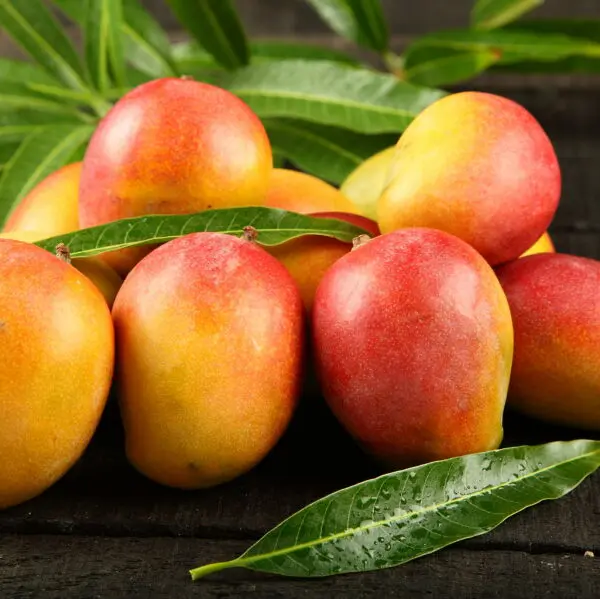

A Complete Central Florida Mango Growing Guide
Mangoes are one of the most popular tropical fruits in the world, and growing a mango tree can be especially rewarding for Florida gardeners.
A healthy mango tree can provide years of fruit, but growing mangoes successfully in Central Florida requires more than simply planting a seed and waiting for a tree to grow.
Choosing the right variety, selecting a warm location, providing good drainage, managing the tree’s size, protecting young trees from cold and paying attention to flowering and disease can make a major difference.
Mango trees can become large if left unpruned, so planning for the mature tree is important from the beginning.
At Arbuckle Creek, we’re interested in both sides of mango growing: producing excellent fruit in Central Florida and understanding whether a backyard mango tree can potentially provide an additional source of income.
Can You Grow Mangoes in Central Florida?
Yes, mangoes can be grown in Central Florida, but location and cold protection are important.
Mango trees are tropical and subtropical plants that perform best in warm areas that do not regularly experience freezing temperatures.
UF/IFAS recommends planting mangoes in the warmest locations available in Florida. Mature trees can tolerate brief exposure to temperatures around 25°F with injury, but young trees can be severely damaged or killed at higher temperatures. Flowers and small fruit are also vulnerable to cold temperatures.
That makes site selection particularly important for Central Florida gardeners.
Choose the warmest part of your property if possible, especially an area protected from cold winds and exposed northern weather.
A location near a south-facing wall or other structure can sometimes provide additional protection from cold, although the tree still needs plenty of sunlight and adequate room to grow.
What Is a Mango?
Mango is the fruit of Mangifera indica, a tropical evergreen tree in the cashew family.
Mango trees can become very large if they are allowed to grow without pruning. UF/IFAS notes that some varieties can eventually reach 30 to 100 feet or more when left unpruned.
Fortunately, home gardeners don’t have to allow a mango tree to become that large.
Proper training and regular pruning can keep many mango trees at a much more manageable size.
Mango fruit varies considerably among cultivars.
Depending on the variety, fruit may have green, yellow, orange, pink or red coloring and may range from small fruit to very large fruit.
Flavor, fiber content, aroma, sweetness, texture and harvest season can also vary substantially.
Choosing the Best Mango Varieties for Florida
There is no single mango variety that is best for every Florida gardener.
Different cultivars vary in:
– Tree size
– Growth rate
– Fruit size
– Flavor
– Fiber content
– Skin color
– Harvest season
– Disease susceptibility
– Seed type
– Production
– Cold exposure tolerance
– Suitability for pruning and small yards
UF/IFAS lists many mango cultivars suitable for Florida home landscapes, including varieties such as Glenn, Cogshall, Angie, Rosigold, Keitt, Kent, Valencia Pride, Carrie, Haden, Edward, Fairchild and others.
Some are naturally less vigorous and easier to maintain as smaller trees, while others become very large.
For a home gardener with limited space, tree size should be one of the first characteristics considered.
A mango variety that produces excellent fruit but eventually becomes enormous may be less practical for a small residential property than a less vigorous variety that can be maintained at a manageable height.
Indian-Type and Indochinese-Type Mangoes
Mangoes can broadly be divided into Indian and Indochinese types.
Many Indian-type mangoes have monoembryonic seeds, meaning the seed generally does not produce a seedling identical to the parent.
Many Indochinese types have polyembryonic seeds, which can produce seedlings that are true to type.
This distinction becomes important if you plan to grow mangoes from seed.
However, don’t choose a variety based on seed type alone.
Fruit quality, tree size, disease susceptibility, harvest season and performance in your location also matter.
Where Should You Plant a Mango Tree?
Mango trees need plenty of sunlight.
Choose a location with:
– Full sun
– Good drainage
– Protection from strong winds
– Adequate room for the mature tree
– Good air circulation
– Protection from severe cold when possible
Avoid planting a mango tree where water regularly collects.
Although mango trees need adequate moisture, their roots perform poorly in persistently saturated soil.
Think about the tree’s eventual size before planting.
A small mango tree from a nursery can look harmless when planted, but some varieties eventually become very large.
UF/IFAS recommends much greater spacing for vigorous trees that will not be regularly pruned, while less vigorous trees maintained through training and annual pruning can be planted considerably closer.
How to Plant a Mango Tree
The best time to plant a mango tree depends on local weather and the condition of the plant.
Avoid planting immediately before a period of severe cold.
Choose a healthy tree with a strong root system and no obvious signs of disease or damage.
Dig a planting hole large enough to accommodate the root system without forcing or bending the roots.
Plant the tree at approximately the same depth at which it was growing in its container.
Do not bury the trunk deeply.
Backfill with the soil removed from the planting hole unless your soil requires a specific amendment strategy.
Water thoroughly after planting and maintain appropriate moisture while the tree becomes established.
Do not keep the planting area constantly saturated.
Growing Mango From Seed
Mangoes can be grown from seed, but seed-grown trees are not always the best choice if your goal is predictable fruit production.
Some mango varieties have polyembryonic seeds that can produce seedlings similar to the parent tree.
Monoembryonic varieties generally do not produce seedlings true to the parent variety.
That means a seed from an excellent mango does not necessarily produce a tree that will eventually produce identical fruit.
Seed-grown mango trees can also take considerably longer to produce fruit than grafted trees.
Growing from seed can nevertheless be a fun project for gardeners who want to experiment or grow a mango tree simply for the experience.
For a detailed step-by-step project, see:
Mango Growing Guide: From Seed to Fruit
Grafted Mango Trees
For a gardener primarily interested in obtaining predictable fruit, a healthy grafted mango tree is usually a more practical starting point than an unknown seedling.
A grafted tree combines a known fruiting variety with a rootstock.
The result is a tree that can produce fruit characteristic of the selected cultivar rather than an unknown seedling.
UF/IFAS reports that grafted mango trees can begin bearing approximately three to five years after planting, although actual timing depends on the tree, cultivar and growing conditions.
When buying a mango tree, find out:
– The cultivar
– The rootstock if available
– Whether it is grafted
– The approximate age
– Whether the parent tree is known to produce well
– Whether the tree has been grown successfully in Florida
How Long Does a Mango Tree Take to Produce Fruit?
There is no single answer for every mango tree.
A grafted tree can begin producing fruit considerably earlier than a seed-grown tree.
UF/IFAS reports that grafted mango trees may begin bearing approximately three to five years after planting.
Seed-grown trees can take longer, and their fruit may not resemble the mango from which the seed came.
Fruit production also depends on:
– Cultivar
– Tree age
– Tree health
– Rootstock
– Sunlight
– Nutrition
– Water management
– Pruning
– Flowering conditions
– Disease
– Cold weather
A young tree should be allowed to establish a healthy structure rather than being forced into production prematurely.
How Can You Encourage Earlier Mango Production?
There is no magic fertilizer or technique that guarantees early fruit.
The best approach is to establish a healthy tree and avoid excessive vegetative growth.
Important factors include:
– Choose a productive cultivar.
– Start with a quality grafted tree when predictable fruit is important.
– Provide full sun.
– Maintain good drainage.
– Avoid excessive nitrogen.
– Train the tree while young.
– Maintain a manageable canopy.
– Protect young trees from severe cold.
– Monitor flowering and disease.
– Avoid unnecessary stress.
Be cautious about internet advice recommending severe drought stress, root restriction or other extreme methods to force flowering.
A stressed tree is not automatically a productive tree.
Fertilizing Mango Trees
Mango trees require nutrients for healthy growth, but excessive fertilizer can create problems.
In particular, excessive nitrogen can encourage vigorous leaf and shoot growth when you would rather have the tree concentrating on flowering and fruit production.
A fertilizer program should be based on the tree’s age, soil conditions, growth, production and nutrient needs.
Young trees generally have different requirements from mature fruiting trees.
Do not automatically fertilize every time leaves appear yellow.
Yellowing can have several causes, including drainage problems, root stress, nutrient deficiencies and environmental conditions.
A soil or tissue test can be much more useful than guessing.
Watering Mango Trees
Mango trees need adequate water, particularly while becoming established and during periods of active growth.
However, continuously wet soil can cause root problems.
Watering needs vary depending on:
– Soil type
– Rainfall
– Temperature
– Tree age
– Root system
– Container versus ground planting
– Time of year
Florida’s rainy season can provide substantial natural moisture.
During dry periods, irrigation may be necessary.
Avoid repeatedly watering the foliage, flowers and fruit when flowering or fruit is present because keeping these surfaces wet can increase disease problems.
Pruning Mango Trees
Pruning is one of the most important tools available to a home mango grower.
Without regular pruning, some mango trees can become extremely large.
Training a young tree helps create a strong framework and encourages lateral branching.
A practical home-garden approach is to:
1. Establish a strong central framework.
2. Encourage well-spaced lateral branches.
3. Remove damaged or crossing branches.
4. Remove poorly positioned growth.
5. Control excessive height.
6. Maintain access for harvesting.
7. Keep the canopy open enough for good air movement.
UF/IFAS recommends pruning mango trees soon after harvest for many varieties.
Selective removal of upper limbs can help maintain a manageable height and reduce harvesting difficulty and storm damage.
Avoid climbing large mango trees to prune them.
Once a mango tree becomes very large, professional tree work may be appropriate.
Mango Flowering
Mango flowers are produced in branching flower clusters called panicles.
Flowering is one of the most important periods of the year because weather conditions during bloom can strongly affect fruit production.
UF/IFAS identifies low temperatures during bloom, anthracnose and powdery mildew as important factors that can reduce fruit set in Florida.
Dry weather before and during flowering is generally favorable for mango production.
Avoid excessive nitrogen leading into flowering because it can encourage vegetative growth.
Mango Pollination
Mango flowers are pollinated primarily by insects.
A healthy flowering period with suitable weather and insect activity is important for fruit set.
Unlike some dragon fruit cultivars, mango does not normally require a gardener to hand-pollinate every flower.
However, good environmental conditions still matter.
Avoid unnecessary insecticide applications while mango trees are flowering because pollinating insects are valuable.
If fruit set is poor, don’t immediately assume that pollination is the only problem.
Cold weather, rain, disease, tree health and variety can all influence fruit set.
Mango Fruit Development
Mango trees produce many flowers, but only a small percentage of those flowers typically develop into mature fruit.
UF/IFAS notes that most Florida mango varieties produce an average of less than one fruit per panicle.
That may sound surprising when you see a tree covered with flowers, but it is normal for many flowers and young fruit to drop.
Fruit development from flowering to maturity generally takes about 100 to 150 days, depending on variety and conditions.
Keep records of flowering and harvest dates for each cultivar you grow.
Over several seasons, these records can become extremely useful.
Mango Fruit Thinning
A mature mango tree may set more fruit than its branches can comfortably support.
Thinning can help manage the crop load and may improve the size and quality of remaining fruit.
It can also help reduce the weight carried by branches.
Thinning decisions depend on the tree, variety, fruit load and desired production.
For a home gardener, the goal is not necessarily to maximize the number of fruit on the tree.
The goal is to produce healthy, high-quality fruit while maintaining the long-term health and structure of the tree.
Protecting Mango Trees From Florida Cold
Cold is one of the most important limitations for mango growing in Central Florida.
Young mango trees are particularly vulnerable.
UF/IFAS reports that young trees may be killed by temperatures around 29–30°F, while mature trees can sustain injury at lower temperatures. Flowers and small fruit can be damaged at temperatures below approximately 40°F for several hours.
These are general guidelines, not guarantees. Actual damage varies with duration, wind, plant condition, location and other factors.
Before a freeze:
– Monitor the weather closely.
– Protect young trees when practical.
– Cover small trees with appropriate frost protection.
– Protect the root area.
– Move container-grown trees to a protected location.
– Avoid pruning immediately before a freeze.
– Avoid unnecessary fertilization that encourages tender new growth immediately before cold weather.
After a freeze, don’t immediately remove every damaged branch.
Cold injury can become more apparent over several days.
Wait until the damage can be evaluated and then prune dead tissue appropriately.
Mango Diseases
The most important disease issue for Florida mango growers is anthracnose.
Anthracnose can affect:
– Flowers
– Young fruit
– Leaves
– Twigs
– Mature fruit
Wet weather and prolonged moisture on susceptible plant surfaces encourage disease development.
Good cultural practices include:
– Full sun
– Good air circulation
– Avoiding overhead irrigation
– Keeping flowers and fruit as dry as practical
– Choosing varieties with better disease resistance when appropriate
– Removing affected plant material when appropriate
– Monitoring the tree during flowering and fruit development
Powdery mildew can also affect mangoes, particularly during flowering.
If disease becomes a serious problem, identify the disease before choosing a treatment and follow current Florida recommendations.
Mango Pests
Mango trees can be affected by a variety of insects and mites.
UF/IFAS lists pests including:
– Thrips
– Scale insects
– Mites
– Bud mites
– Ambrosia beetles
– Other occasional pests
Not every insect requires treatment.
Regularly inspect:
– New leaves
– Flower panicles
– Developing fruit
– Branches
– The underside of leaves
If a pest population becomes significant, identify it before applying a pesticide.
Avoid unnecessary pesticide applications, particularly while flowers are open and pollinating insects are active.
Growing Mangoes in Containers
Mango trees can be grown in containers, particularly when using a less vigorous cultivar and maintaining the tree through pruning.
Container growing can be useful for gardeners with limited space or gardeners who need to move young trees to protected locations during cold weather.
Use:
– A large container
– Excellent drainage
– A quality growing medium
– A suitable mango variety
– Full sun
– Regular monitoring of moisture
– Appropriate pruning
Remember that a container mango tree is still a tree.
Eventually, root space, container size and tree height become limiting factors.
Don’t assume that keeping a mango tree in a pot automatically makes it a dwarf tree.
When Are Mangoes Ready to Harvest?
Mango harvest timing varies considerably among varieties.
Do not use one universal harvest rule for every mango.
Fruit may be ready when it has reached appropriate mature size and development for the particular cultivar.
Depending on the variety, external color may or may not be a reliable indication of maturity.
Other characteristics can include:
– Fruit size
– Shape
– Shoulder development
– Skin color
– Aroma
– Firmness
– Internal maturity
When learning a new variety, harvest a small number at different stages and learn how that particular mango behaves.
After harvesting, many mangoes continue to ripen at room temperature.
How Much Fruit Can a Mango Tree Produce?
Mango production varies widely.
UF/IFAS reports average yields of approximately 220–330 pounds from mature Florida mango trees under suitable conditions, while noting that greater yields are possible with good management and favorable weather.
Those numbers should not be interpreted as a guaranteed backyard yield.
Production depends on:
– Cultivar
– Tree age
– Tree size
– Rootstock
– Weather
– Flowering conditions
– Disease
– Pollination
– Nutrition
– Water
– Pruning
– Fruit thinning
For your own tree, keep track of actual harvest weight rather than relying entirely on published averages.
Record:
Variety
Number of fruit
Total harvest weight
Average fruit weight
Harvest dates
Fruit quality
Amount sold
Selling price
This will eventually give you a much better picture of your own production.
Is Growing Mangoes Profitable?
Mangoes can potentially be a valuable specialty fruit for a home grower, but production does not automatically equal profit.
Your actual economics depend on:
– Yield
– Cultivar
– Fruit quality
– Local selling price
– Production costs
– Labor
– Fertilizer
– Irrigation
– Pest and disease management
– Packaging
– Harvest losses
– Where you sell the fruit
Commercial Florida mango production is concentrated primarily in southern Florida, while Central Florida presents different climate and cold-risk considerations.
For a backyard grower, the most useful calculation is:
Gross mango sales − production and selling expenses = estimated net income
Don’t base your expected income on the highest retail price you can find.
Track your actual harvest and actual selling prices.
For a detailed breakdown, see:
How Much Money Can You Make Growing Mangoes at Home?
Selling Homegrown Mangoes
Potential direct customers may include:
– Friends and neighbors
– Local customers
– Farmers markets
– Specialty fruit buyers
– Restaurants
– Small produce businesses
– Direct-to-consumer customers
Selling fresh fruit is different from selling processed products such as jam, juice or prepared foods.
Before selling commercially, check the rules that apply to your location and the type of product being sold.
Keep records of:
– Harvest quantity
– Fruit sold
– Selling price
– Unsold fruit
– Packaging
– Fertilizer
– Irrigation
– Pest management
– Other expenses
This allows you to determine whether your mango trees are actually generating a profit.
Mango Recipes
Mangoes are one of the most versatile fruits you can grow.
Fresh mango can be used in:
– Salsas
– Salads
– Seafood dishes
– Chicken
– Steak
– Pork
– Sauces
– Desserts
– Smoothies
– Drinks
At Arbuckle Creek, we’re building a collection of mango recipes that includes meat, seafood and vegan options.
Visit our:

page to explore individual recipes.
Frequently Asked Questions
Can mango trees grow in Central Florida?
Yes. Mango trees can be grown in protected areas of Central Florida, although cold temperatures are an important limitation.
What is the best mango variety for Florida?
There is no single best variety for every location. Consider tree size, fruit quality, harvest season, disease susceptibility and your local growing conditions.
Do mango trees need full sun?
Yes. Mango trees perform best in full sun.
Can I grow a mango tree from seed?
Yes, but the resulting tree may not produce fruit identical to the parent. Seed type matters because polyembryonic and monoembryonic mangoes behave differently.
Is a grafted mango tree better for a home garden?
If predictable fruit and earlier production are important, a known grafted tree is generally a more practical starting point than an unknown seedling.
How long does a grafted mango tree take to fruit?
UF/IFAS reports that grafted mango trees may begin bearing approximately three to five years after planting, although actual timing varies.
How big can a mango tree get?
Some mango varieties can become very large if left unpruned. Proper variety selection and regular pruning can help maintain a manageable size.
When should mango trees be pruned?
For many Florida mango varieties, pruning soon after harvest is recommended. Timing can vary by variety and local conditions.
Can mango trees survive a Florida freeze?
Mango trees can suffer serious cold injury. Young trees are especially vulnerable, and flowers and young fruit can be damaged at temperatures well above freezing.
Why does my mango tree flower but not produce fruit?
Poor fruit set can result from cold weather during flowering, disease, weather conditions, tree health and other factors. Not every flower becomes a mature mango.
How much fruit can a mature mango tree produce?
Production varies considerably. UF/IFAS reports average Florida yields of approximately 220–330 pounds for mature trees under suitable conditions, but backyard results can be substantially different.
Can mangoes be grown in containers?
Yes. Container growing is possible with appropriate varieties, large containers, good drainage, full sun and regular pruning.
Can growing mangoes at home make money?
It can potentially provide specialty-fruit income, but profitability depends on actual production, selling price, expenses and your local market.
Keep Growing With Arbuckle Creek
Mangoes can be one of the most rewarding fruit trees for a Florida home garden, but successful growing starts with choosing the right variety and location.
For Central Florida gardeners, cold protection, drainage, pruning and disease management deserve special attention.
The best way to understand what your mango trees can produce is to keep records from year to year.
Track flowering, fruit set, harvest dates, total weight, fruit quality and selling prices.
Over time, those records can tell you far more about the potential of your own trees than a generic production estimate.
At Arbuckle Creek, we’re documenting the process of growing tropical and unusual fruit in Central Florida—from planting and propagation to harvesting, recipes and the potential economics of growing specialty fruit at home.
Explore our other growing guides, profitability articles, recipes and plants and cuttings available from Arbuckle Creek.
Other related articles