
A Completal Florida Dragon Fruit Growing Guide
Dragon fruit, also called pitaya or pitahaya, is one of the most unusual and rewarding tropical fruits a home gardener can grow in Florida.
Unlike a traditional fruit tree, dragon fruit grows as a climbing cactus with long, fleshy stems. With the right support, plenty of sunlight, good drainage, proper pruning and reliable pollination, a relatively small growing area can produce a surprising amount of fruit.
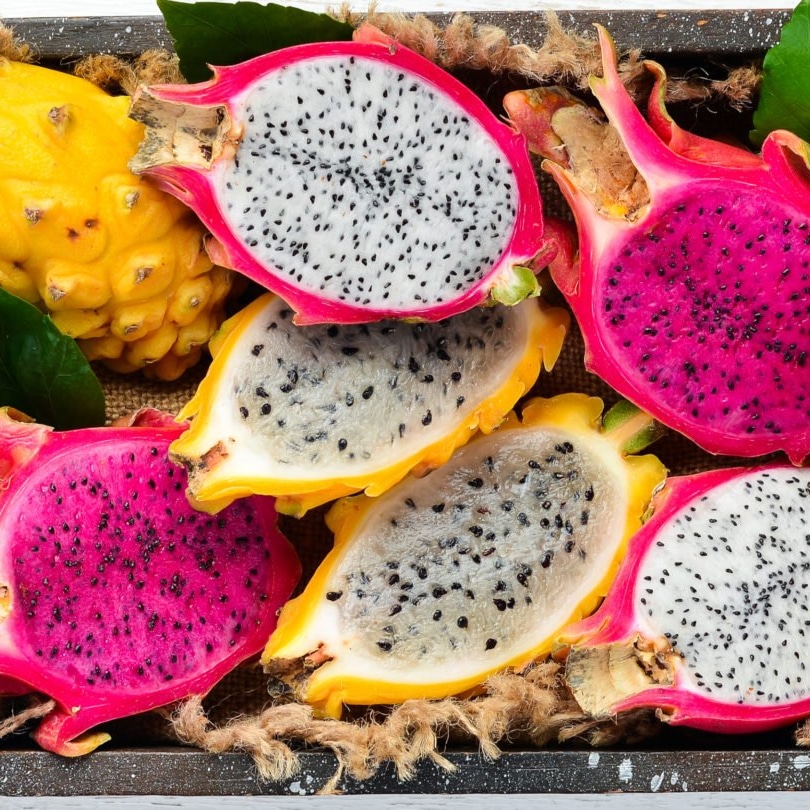
Dragon fruit is also interesting from a specialty-crop standpoint. Different varieties can produce fruit with white, pink, red or magenta flesh, and some varieties have yellow skin. That combination of unusual appearance, flavor and limited availability can make locally grown dragon fruit attractive to specialty fruit customers.
At Arbuckle Creek, we’re interested in both sides of dragon fruit: how to grow it successfully in Central Florida and how a home gardener can evaluate whether growing it for personal use or potential income makes sense.
Can You Grow Dragon Fruit in Central Florida?
Yes. Dragon fruit can be grown in Central Florida, although location and winter protection matter.
Dragon fruit prefers warm conditions and performs best in tropical and subtropical climates. It can tolerate some cooler conditions, but freezing temperatures can damage stems and young plants.
A sunny, well-drained location is important. Areas protected from strong winds and cold northwestern exposure can be especially useful during Florida’s occasional cold spells.
For Central Florida growers, one of the biggest advantages of dragon fruit is that it can be grown in the ground, on a properly constructed trellis, or in a large container.
The plant is also easy to propagate from cuttings, making it possible for a gardener to build a planting gradually rather than purchasing a large number of mature plants.
What Is Dragon Fruit?
Dragon fruit is the edible fruit produced by several closely related climbing cactus species and hybrids.
The plants have long, green, three-sided or sometimes multi-sided stems with small spines or nearly spineless edges depending on the type. The stems climb using aerial roots and can become quite long if they are not trained.
The flowers are one of the most spectacular features of the plant.
Large, fragrant flowers open primarily at night. Some can be extremely large, and the flowers may open for only a short period before closing.
After successful pollination, the flower develops into the fruit.
The fruit normally has colorful skin with green-to-red scales and may contain white, pink, red or magenta flesh filled with tiny edible black seeds.
Dragon Fruit Varieties for Florida
There are many dragon fruit species, named cultivars and hybrids, and choosing a variety is more complicated than simply choosing a fruit color.
Some cultivars are capable of setting fruit with their own pollen, while others may be self-incompatible and perform much better when pollen from a genetically different plant is available.
For that reason, don’t assume that every dragon fruit plant will behave the same way.
When choosing plants for your Central Florida garden, consider:
– Fruit color and flavor
– Skin color
– Flesh color
– Fruit size
– Flowering season
– Self-compatibility
– Cold sensitivity
– Disease resistance
– Growth habit
– Local performance
– Availability of healthy cuttings
If possible, learn exactly what cultivar or selection you are buying.
A plant that has been producing heavily in your area can be much more useful than an unidentified plant chosen only because the fruit looks attractive.
If you already have an unidentified dragon fruit plant, don’t automatically remove it. A mystery plant can still be valuable if it grows vigorously, flowers well and produces good fruit.
Where Should You Plant Dragon Fruit?
Choose the planting location carefully because a mature dragon fruit plant can become large and heavy.
Look for:
– Full sun for strong growth and fruit production
– Well-drained soil
– Good air circulation
– Protection from strong winds
– Room for a permanent support structure
– Easy access for pruning and harvesting
– Protection from areas where cold air collects
Avoid low areas that remain wet after heavy rain.
Although dragon fruit is a cactus, it still needs adequate moisture during active growth. The problem is not simply water—it is prolonged saturation around the roots.
How to Plant Dragon Fruit
If planting in the ground, prepare the soil so excess water can drain away.
A sturdy support should be installed before the plant becomes large.
Dragon fruit is not a plant that should simply be allowed to crawl across the ground.
The support needs to be strong enough to carry the weight of mature stems, flowers and fruit.
Plant the dragon fruit cutting or young plant near the base of the support and train the main stems upward.
As the plant grows, gently secure the stems to the support without cutting into them.
The Dragon Fruit Trellis
A strong trellis is one of the most important investments you can make.
A common design uses a sturdy central post with a top structure that allows the stems to reach the top and then hang downward.
The goal is to create a framework where the plant can grow upward and then form a curtain of hanging branches.
The support must be considerably stronger than it initially appears necessary.
A small cutting may seem insignificant when planted, but a mature plant can develop many heavy stems.
Plan for the mature plant rather than the size of the cutting.
For a detailed step-by-step explanation, see our guide:
How to Build a Trellis and Plant a Dragon Fruit Cutting
Growing Dragon Fruit From Cuttings
Cuttings are generally the practical way for a home gardener to produce new dragon fruit plants.
Choose a healthy, mature stem from a vigorous plant.
A good cutting should be:
– Healthy and green
– Free from soft or rotting areas
– Free from obvious disease
– Large enough to establish quickly
– Taken from a plant with desirable characteristics whenever possible
Allow the cut end to dry and callus before planting.
Plant the cutting in well-drained soil and provide support from the beginning.
Avoid keeping the soil constantly wet while the cutting is developing roots.
Once established, growth can become surprisingly fast during warm weather.
Growing Dragon Fruit From Seed
Dragon fruit can also be grown from seed.
However, seed-grown plants have disadvantages for someone interested in predictable fruit production.
Seedlings can take considerably longer to produce fruit, and the resulting plant may not reproduce the exact characteristics of the parent plant.
If you want a known cultivar, a healthy cutting from a known fruiting plant is generally more predictable.
Seed growing is still an excellent project for gardeners who enjoy experimenting, breeding and watching a plant develop from seed to fruit.
For a step-by-step project, see:
Growing Dragonfruit From Seed to Fruit
How Long Does Dragon Fruit Take to Produce Fruit?
The answer depends heavily on how the plant was started and how well it is grown.
A healthy cutting from a mature, productive plant can begin producing considerably sooner than a seed-grown plant.
Growth rate is affected by:
– Variety
– Cutting size
– Root development
– Sunlight
– Temperature
– Nutrition
– Water management
– Trellis and training
– Pollination
– Overall plant health
Don’t judge a dragon fruit plant solely by its age.
A well-established plant with a strong root system and properly trained branches is in a much better position to produce fruit than a plant that has simply been left to grow without support.
Training and Pruning Dragon Fruit
Pruning is one of the most important parts of dragon fruit management.
The goal is not to allow every stem to grow indefinitely.
Instead, develop a strong framework and remove weak, damaged, diseased or excessively crowded growth.
A practical training system is:
1. Choose strong main stems.
2. Train them upward toward the top of the trellis.
3. Allow the desired stems to reach the top.
4. Encourage the productive branches to hang downward.
5. Remove weak or overcrowded growth.
6. Remove damaged or diseased sections promptly.
7. Keep the center of the plant open enough for good air circulation.
Pruning can also make harvesting much easier.
A neglected dragon fruit plant can quickly become a tangled mass of stems that is difficult to inspect, pollinate and harvest.
For Florida growers, pruning also plays an important role in plant health and disease management.
Dragon Fruit Flowering
Dragon fruit flowers are one of the main reasons people enjoy growing this plant.
The large flowers generally open at night, producing a spectacular display.
Flowering is affected by the plant’s maturity, environmental conditions, day length, nutrition and overall health.
Once you see flower buds forming, pay close attention.
This is the time when pollination becomes especially important.
Dragon Fruit Pollination
Pollination is one of the most important subjects for dragon fruit growers.
Some cultivars are self-compatible, while others are self-incompatible.
That means a plant can produce beautiful flowers and still produce disappointing amounts of fruit if the flowers do not receive compatible pollen.
Planting two or more genetically different types can improve the chances of successful cross-pollination.
Hand pollination is another valuable technique.
When a flower opens at night:
1. Use a clean, soft brush.
2. Collect pollen from the anthers.
3. Gently transfer the pollen to the stigma.
4. If possible, use pollen from a genetically different plant.
5. Perform the pollination while the flower is open.
6. Check the flower over the following days for fruit development.
Keep a record of which pollen came from which plant.
If you are growing several varieties, this can eventually help you determine which combinations produce the best fruit set.
What Happens After Pollination?
A successfully pollinated flower begins developing into a fruit.
As the fruit grows, the flower gradually withers and the developing fruit becomes more obvious.
Several flowers and fruits can be present on the same plant at different stages.
This is one reason dragon fruit can be such an interesting crop for a small backyard garden.
With multiple flowering cycles and a healthy mature plant, harvests can occur over an extended period rather than all at once.
Fertilizing Dragon Fruit
Dragon fruit grows vigorously and needs adequate nutrition, but more fertilizer is not necessarily better.
Avoid excessive nitrogen, particularly when the plant is mature and you are trying to encourage flowering and fruit production.
A balanced fertilizer program should take into account:
– Soil conditions
– Plant age
– Growth rate
– Flowering stage
– Container versus ground planting
– Micronutrient availability
Organic matter can also be useful when incorporated appropriately into a well-drained growing system.
If your plants show unusual yellowing, weak growth or poor production, don’t automatically assume they need more fertilizer.
Problems with drainage, roots, pests, disease, sunlight or pollination can produce similar symptoms.
Watering Dragon Fruit
Dragon fruit needs water during active growth, but constantly wet roots can cause problems.
Water deeply when needed rather than keeping the soil continuously saturated.
The exact frequency depends on:
– Soil type
– Drainage
– Rainfall
– Temperature
– Container size
– Plant size
– Time of year
Florida’s rainy season can provide more water than the plant needs, while periods of hot, dry weather may require supplemental irrigation.
Always consider the moisture in the soil before watering again.
Growing Dragon Fruit in Containers
Dragon fruit can be grown successfully in containers if the container is large enough and the plant has a strong support structure.
Container growing can be particularly useful for gardeners with limited space or gardeners who need to move young plants to a protected location during cold weather.
Use:
– A large container
– Excellent drainage
– A fast-draining growing medium
– A sturdy support
– Plenty of sunlight
Remember that the larger the plant becomes, the more important the stability of the container and support becomes.
For more information, see:
Growing Dragon Fruit in Containers
Protecting Dragon Fruit From Florida Cold
Cold weather is one of the biggest challenges for Central Florida dragon fruit growers.
Dragon fruit is a tropical/subtropical plant and can be damaged by freezing temperatures.
Young plants and exposed new growth are particularly vulnerable.
Before a freeze:
– Stop unnecessary watering immediately before extremely cold weather if appropriate for your conditions.
– Move container plants to a protected location.
– Cover vulnerable plants with frost protection when practical.
– Protect the root zone with appropriate mulch.
– Avoid exposing tender plants to wind and freezing air when possible.
After a freeze, don’t immediately cut off every damaged section.
Cold injury can take time to become obvious.
Wait until the extent of the damage can be evaluated, then remove dead or rotting tissue with clean tools.
For detailed information, see:
What to Do When Your Dragon Fruit Plants Suffer a Freeze
and
How Dragon Fruit Reacts to Freezing Temperatures
Common Dragon Fruit Problems
No Fruit Despite Lots of Flowers
Possible causes include:
– Self-incompatibility
– Poor pollination
– Lack of compatible pollen
– Weather conditions
– Plant stress
– Poor nutrition
– Immature plants
Hand pollination is often worth trying.
Yellow or Soft Stems
Possible causes include:
– Excessive moisture
– Poor drainage
– Root problems
– Disease
– Cold damage
Don’t automatically assume the plant needs fertilizer.
Weak, Tangled Growth
This is often a training and pruning problem.
Establish a strong trellis system and selectively remove excess growth.
Sun Damage
Dragon fruit generally appreciates strong light, but newly established plants can be vulnerable to sudden exposure to intense Florida sun.
Gradually acclimate young plants when necessary.
Disease
Watch for unusual spots, rotting tissue, cankers or rapidly declining stems.
Good drainage, air circulation, sanitation and appropriate pruning can help reduce problems.
If you suspect a serious disease, identify the problem before applying a treatment.
Dragon Fruit Pests
Dragon fruit can be affected by insects and other pests.
UF/IFAS has documented several pests associated with pitaya production in Florida, including thrips and other insects.
Inspect:
– New growth
– Flower buds
– Flowers
– Developing fruit
– Damaged stems
Look for unusual discoloration, scars, insects or distorted growth.
Avoid spraying beneficial pollinators unnecessarily, especially while flowers are open.
When a pest problem becomes serious, identify the pest before selecting a control method.
When Is Dragon Fruit Ready to Harvest?
Harvest timing depends on the variety.
One of the easiest mistakes for a new grower is harvesting based only on size.
Watch the fruit’s color and appearance.
As the fruit approaches maturity, the skin develops the characteristic color associated with that variety.
Harvesting too early can result in disappointing flavor.
Leaving fruit too long can increase the risk of damage, pests or fruit deterioration.
Keep records of:
– Flowering date
– Pollination date
– Variety
– Color change
– Harvest date
– Fruit weight
– Flavor
– Fruit quality
After a few seasons, your own records can become one of your most valuable growing tools.
How Much Dragon Fruit Can a Plant Produce?
There is no single reliable number that applies to every dragon fruit plant.
Production depends on:
– Variety
– Age
– Plant size
– Number of productive branches
– Pollination
– Fertility
– Water
– Sunlight
– Weather
– Disease pressure
– Pruning
– Growing system
Instead of relying on a generic internet yield number, measure your own production.
For every harvest, record:
Number of fruits
Total weight
Average fruit weight
Variety
Harvest date
Fruit quality
After several seasons, you will have real production information from your own Central Florida growing conditions.
Is Growing Dragon Fruit Profitable?
Dragon fruit can be an interesting specialty fruit for a home grower, but profitability depends on much more than the retail price of the fruit.
Your potential results depend on:
– Yield
– Fruit size
– Variety
– Local selling price
– Production costs
– Labor
– Trellis costs
– Irrigation
– Fertilizer
– Pest and disease management
– Packaging
– Harvest losses
– How and where the fruit is sold
A backyard grower should calculate actual production rather than assuming that a high retail price equals high profit.
The most useful calculation is:
Gross fruit income − growing and selling expenses = estimated net income
Your own harvest records will eventually give you much better information than a generic estimate.
For a detailed look at the economics, see:
How Much Money Can You Make Growing Dragon Fruit at Home?
Selling Homegrown Dragon Fruit
Potential customers for locally grown dragon fruit may include:
– Friends and neighbors
– Local customers
– Farmers markets
– Specialty fruit buyers
– Local restaurants
– Small produce businesses
– Direct-to-consumer customers
Before selling, check the rules that apply to your location and the type of product you intend to sell.
Fresh whole fruit is different from processed products such as juice, jam or prepared foods, which may have additional requirements.
If you plan to sell regularly, keep records of:
– Amount harvested
– Amount sold
– Selling price
– Unsold fruit
– Packaging costs
– Fertilizer costs
– Irrigation costs
– Other production expenses
This will tell you whether your dragon fruit project is actually producing income rather than simply producing valuable fruit.
Dragon Fruit Recipes
Growing dragon fruit is only half the fun.
Fresh dragon fruit can be eaten chilled, added to fruit salads, blended into drinks, incorporated into desserts and used in savory dishes.
At Arbuckle Creek, we’re building a collection of dragon fruit recipes that gives home growers ideas for using their harvest.
Visit our:
Dragon Fruit Recipes

for individual recipes featuring dragon fruit.
Frequently Asked Questions
Can dragon fruit grow in Central Florida?
Yes. Dragon fruit can be grown in Central Florida, particularly in a warm, sunny, well-drained location with protection from severe cold.
Does dragon fruit need a trellis?
Yes. A strong support system is highly recommended because the plant develops long, heavy climbing stems.
Can I grow dragon fruit from a cutting?
Yes. Cuttings are a practical way to propagate dragon fruit and generally provide more predictable results than growing from seed when the parent plant is known.
Can dragon fruit grow in a pot?
Yes. Use a large container with excellent drainage and a strong support structure.
Does dragon fruit need full sun?
Dragon fruit performs well with strong sunlight, although young plants may need gradual acclimation to intense Florida sun.
Do I need two dragon fruit plants?
Not necessarily. Some cultivars are self-compatible, while others are self-incompatible. Growing genetically different plants can increase the chances of successful pollination and fruit production.
Do dragon fruit flowers open at night?
Yes. The large flowers generally open at night, which is one of the plant’s most remarkable characteristics.
Should I hand-pollinate dragon fruit?
Hand pollination can be very useful, especially with cultivars that are self-incompatible or when natural pollination is unreliable.
How long does dragon fruit take to produce fruit?
It depends on the cultivar, starting material and growing conditions. Plants grown from established cuttings can produce much sooner than seed-grown plants.
Can dragon fruit survive a Florida freeze?
Dragon fruit can be damaged by freezing temperatures. Young plants are especially vulnerable, so cold protection is important in Central Florida.
Is dragon fruit profitable to grow at home?
It can be a potential specialty-fruit income opportunity, but profitability depends on actual yield, selling price, production costs and your local market.
Keep Growing With Arbuckle Creek
Dragon fruit is one of the most interesting fruits you can grow in a Central Florida backyard.
With a strong trellis, good drainage, adequate sunlight, proper pruning and reliable pollination, a relatively small growing area can become a productive fruiting system.
The best way to improve your results is to keep records and learn from your own plants.
At Arbuckle Creek, we’re documenting what it takes to grow tropical and unusual fruit in Central Florida—from planting and propagation to harvesting, recipes and the potential economics of growing specialty fruit at home.
Explore our other growing guides, profitability articles, recipes and plants and cuttings available from Arbuckle Creek.
Can I successfully grow dragonfruit on my small Central Florida property and make good profit?
A simple guide to growing dragonfruit from cuttings to fruit
5 Tips for getting bees to pollinate your Dragonfruit plants
The myths surrounding Dragonfruit
10 health benefits of eating dragonfruit
What are the different types of Dragonfruit and what are their characteristics
Is Dragonfruit a profitable venture for the home gardener?
The predicted price of Dragonfruit for 2024
What are the health benefits of Dragonfruit?
Leave a Reply