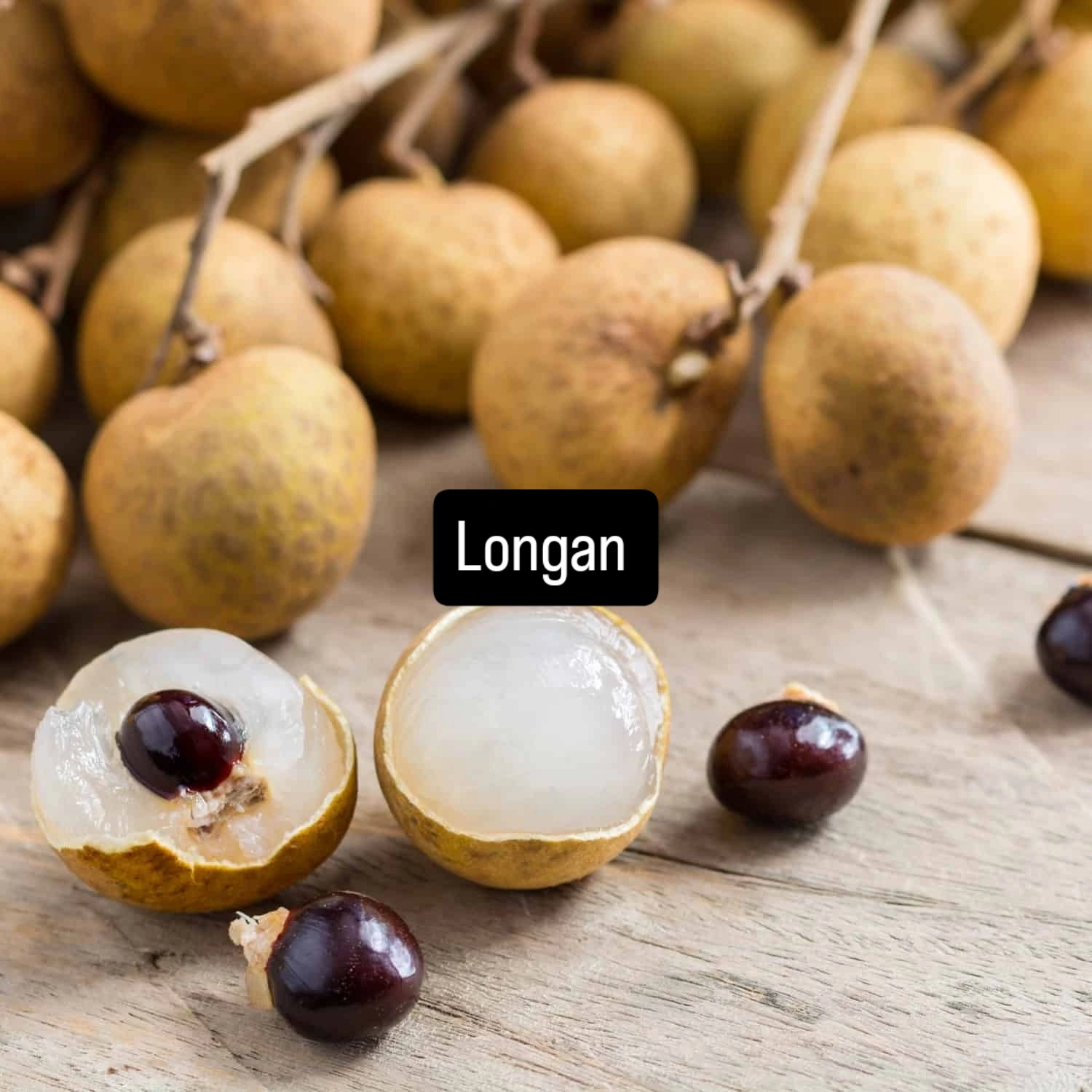
If you’re growing longan at home in Central Florida with profitability in mind, I would focus on cultivars that combine good fruit quality, reliable production, manageable tree size, and a marketable harvest season.
UF/IFAS reports that about 99% of Florida’s commercial longan acreage is planted with ‘Kohala’, and its current guidance still says no other cultivar has been demonstrated to be superior overall. �
Ask IFAS – Powered by EDIS +1
🏆 My ranking for a profitable home grower
Rank
Variety
Profit potential
Why
1
Kohala
⭐⭐⭐⭐⭐
Proven Florida performer, excellent fruit, established market
2
Biew Kiew
⭐⭐⭐⭐⭐
High-quality fruit, smaller seed, later harvest
3
Edau (Daw)
⭐⭐⭐⭐½
Potentially more regular bearing
4
Chompoo
⭐⭐⭐⭐
Large, high-quality fruit; interesting premium-market option
5
Diamond River
⭐⭐⭐⭐
Early/precocious and can produce off-season
6
Haew
⭐⭐⭐½
Large fruit, but less proven in Florida
1. 🥇 Kohala — Best overall money-maker
If you only plant one, I’d choose Kohala.
It has several advantages for a small Florida grower:
Large to medium-large fruit
Small-to-medium seed
Good to very good fruit quality
Established Florida production history
Widely recognized by growers and consumers
Usually ripens mid-July through August
Extremely well adapted to South/Central Florida
UF/IFAS identifies Kohala as the best established all-around choice and recommends it for Florida home plantings. �
Ask IFAS – Powered by EDIS +1
The big disadvantage is erratic bearing. A tree can have an outstanding crop one year and a disappointing crop the next.
2. 🥈 Biew Kiew — Potential premium-market variety
This is the one I’d seriously consider adding alongside Kohala.
UF/IFAS lists Biew Kiew as producing medium-large fruit with a small-to-medium seed and good-to-very-good fruit quality, with a late-July through September season. �
Ask IFAS – Powered by EDIS
That later harvest can be valuable because you’re not putting all your fruit into the market at exactly the same time as Kohala.
My strategy:
Plant Kohala + Biew Kiew rather than 10 trees of Kohala alone.
3. 🥉 Edau (Daw) — Interesting for consistent production
Edau is particularly interesting from a business perspective because UF/IFAS lists its bearing habit as “regular?”, compared with the “erratic” designation given to Kohala and most of the other cultivars in its table. �
Ask IFAS – Powered by EDIS
It produces:
Medium-large fruit
Small-medium seed
Good fruit quality
Late July–September harvest
The question mark matters, though: it isn’t as thoroughly proven commercially in Florida as Kohala.
4. Chompoo — Premium fruit opportunity
Chompoo produces large fruit with a small-to-medium seed and good-to-very-good fruit quality according to UF/IFAS. �
Ask IFAS – Powered by EDIS
That’s attractive if you’re selling directly to customers.
For a backyard business, I’d rather sell:
“Large premium Thai longan”
than compete strictly on price with commodity longan.
The downside is that its Florida production history isn’t nearly as established as Kohala.
5. Diamond River — Interesting for extending your season
Diamond River is unusual.
UF/IFAS reports that it has been reported to:
Fruit every year
Be precocious
Produce off-season
Produce a substantial late-season crop
However, the fruit quality is only rated fair-to-good, and the tree is particularly susceptible to limb breakage. �
Ask IFAS – Powered by EDIS
So I wouldn’t make it your primary commercial tree.
But it could be useful as a season-extension tree.
💰 What I’d plant if this were my Central Florida property
I’d build a small four-variety longan collection:
40% Kohala
30% Biew Kiew
20% Edau
10% Chompoo or Diamond River
That gives you a better chance of having fruit available across a longer period rather than putting all your production into one cultivar and one harvest window.
And there’s a real commercial opportunity here. UF/IFAS’s South Florida profitability study used an example of 250 lb of fruit per mature tree, with an 83% marketable pack-out, resulting in roughly 18,053 marketable pounds per acre at the assumed commercial planting density. Its historical example used an average packinghouse price of $1.50/lb. �
Ask IFAS – Powered by EDIS
That doesn’t mean a backyard grower will receive $1.50/lb—direct-to-consumer sales can be a very different market, and prices vary substantially by quality, timing, location, and whether you’re selling wholesale or retail.
🌱 The biggest profit trick
For a small home grower, I wouldn’t try to compete with imported longan on volume.
I’d sell fresh, locally grown, tree-ripened longan directly to customers.
A small number of productive trees can potentially become more valuable when you sell:
Fresh picked fruit
Premium varieties
Mixed-variety boxes
“Florida-grown” longan
Preordered harvest boxes
Local farmers-market fruit
Direct farm-gate sales
Kohala gives you the dependable foundation; Biew Kiew and Chompoo give you premium differentiation; Edau/Diamond River can help extend the harvest.
How to make longan trees fruit early for market
How to Grow Longan Trees in Florida
A Complete Central Florida Longan Growing Guide
Leave a Reply