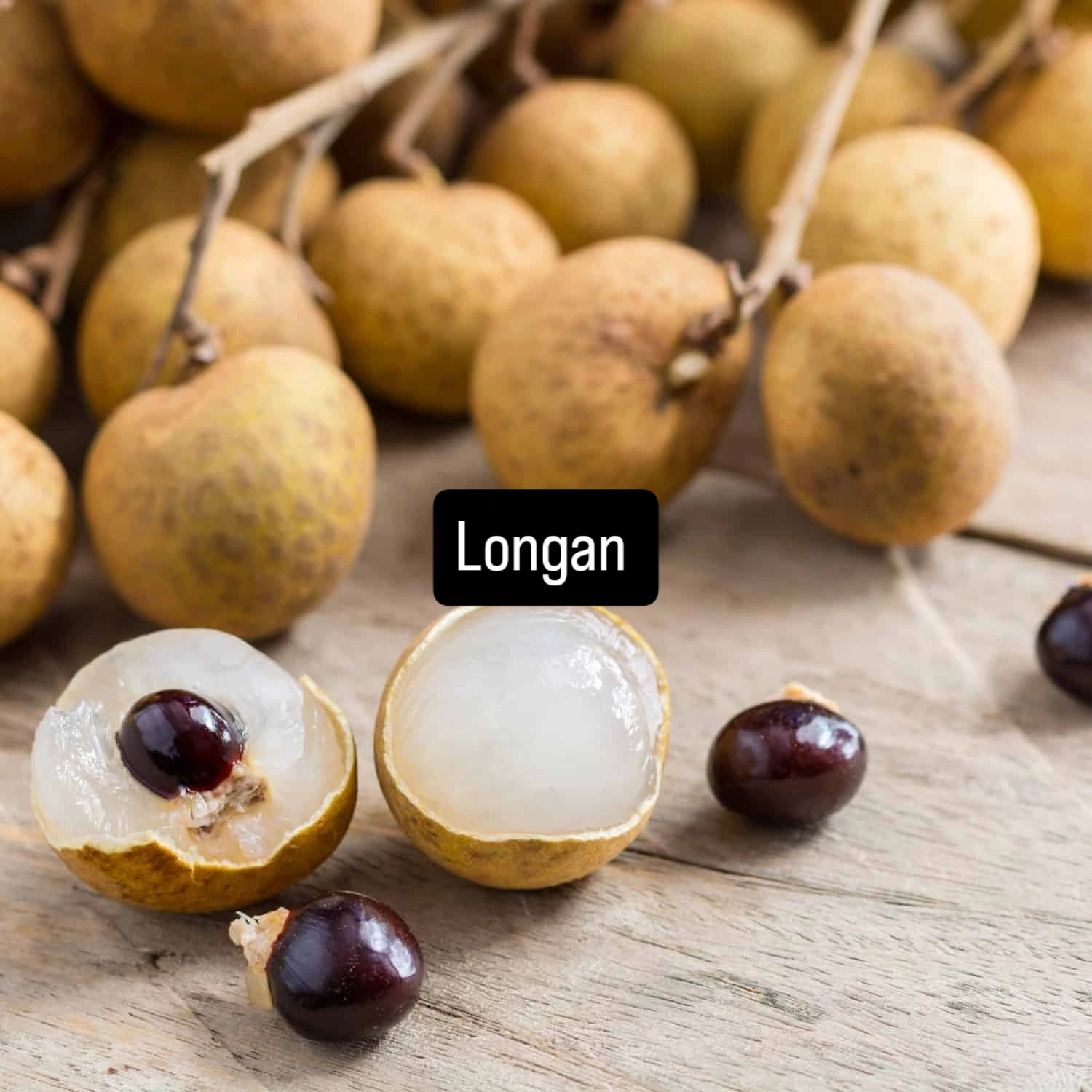
Longan may not be as familiar to American gardeners as oranges, lemons, or mangoes, but this tropical fruit tree can be an excellent choice for Florida growers.
Sometimes called the “dragon eye” fruit, longan produces clusters of small, round fruits with tan-brown skin, translucent white flesh, and a dark seed in the center. When perfectly ripe, the fruit is exceptionally sweet and aromatic.
For Florida homeowners with enough sunshine and the right growing conditions, a longan tree can provide years of beautiful foliage—and, eventually, delicious harvests.
But growing longan successfully takes more than simply planting a seed and waiting.
This guide walks you through everything a beginner needs to know about growing longan in Florida.
🌱 What Is a Longan Tree?
Longan (Dimocarpus longan) is a tropical and subtropical fruit tree related to lychee and rambutan.
The tree can become quite large when allowed to grow naturally, with dense evergreen foliage and a broad canopy. Mature trees can produce impressive clusters of fruit during the summer growing season.
Longan is particularly well suited to Florida because it enjoys:
Warm temperatures
Plenty of sunlight
Well-drained soil
Regular moisture
A subtropical or tropical climate
Central and South Florida provide some of the better growing conditions in the state, although cold temperatures can still be a concern during occasional winter freezes.
☀️ Step 1: Choose the Right Location
Location is one of the most important decisions you’ll make.
Longan trees perform best in full sun, ideally receiving at least 6–8 hours of direct sunlight each day.
Choose an area that:
Gets abundant sunlight
Has good air circulation
Does not remain soggy after rain
Has enough room for the tree to grow
Is protected from strong cold winds when possible
Don’t plant your longan directly beside a house, fence, septic system, or other structure simply because the young tree looks small.
That little tree can eventually become a substantial landscape plant.
Give Your Tree Room
A mature longan can develop a large canopy, so think about its eventual size—not its size when you bring it home from the nursery.
A good planting location today can save you years of pruning and transplanting problems later.
🌿 Step 2: Understand Florida Soil
Florida soil can vary considerably from one property to another.
Many Florida locations have sandy soil that drains quickly but may contain relatively little organic matter.
Longan trees don’t like constantly wet roots, but they also need adequate moisture during establishment and fruit development.
The goal is well-drained soil that holds enough moisture and nutrients to support healthy growth.
Before planting, examine your soil.
If water sits around the planting area after heavy rain, improve drainage before putting your tree in the ground.
For particularly sandy sites, incorporating appropriate organic matter into the planting area can help improve the soil environment.
🌳 Step 3: Buy the Right Tree
If your goal is fruit production, purchasing a grafted or air-layered nursery tree is generally preferable to growing longan from seed.
Why?
Because seed-grown trees can be highly variable.
A seedling may:
Take many years to produce fruit
Become very large before flowering
Produce fruit that isn’t identical to the parent tree
Potentially produce disappointing fruit
A quality grafted or air-layered tree gives you a much better idea of what you’re getting.
What Should You Look For?
Choose a healthy tree with:
Dark green foliage
Strong branches
No obvious insect infestations
No serious trunk damage
A healthy root system
A reputable variety and nursery source
Don’t be afraid to ask the nursery what variety you’re buying and how the tree was propagated.
💧 Step 4: Watering Your Longan Tree
Young longan trees need consistent moisture while their root systems become established.
That doesn’t mean keeping the soil saturated.
Instead, water deeply and allow the soil to drain.
During hot Florida weather, newly planted trees may require frequent irrigation, particularly during dry periods.
Once established, longan trees become considerably more tolerant of short periods of dryness.
Avoid Overwatering
One of the biggest mistakes new growers make is assuming that tropical trees always want wet soil.
They don’t.
Tropical does not mean waterlogged.
Constantly saturated soil can damage roots and contribute to serious tree health problems.
🍃 Step 5: Mulch the Right Way
Mulch can be extremely helpful in Florida.
A layer of organic mulch can:
Reduce evaporation
Moderate soil temperature
Suppress weeds
Add organic material as it breaks down
Protect shallow roots
Keep mulch several inches away from the trunk.
Never create a volcano of mulch around the base of the tree.
The trunk should remain exposed and dry.
🌱 Step 6: Fertilizing Longan Trees
Longan trees need nutrients for healthy vegetative growth, flowering, and fruit production.
However, more fertilizer isn’t necessarily better.
Young trees should generally receive smaller, appropriately timed applications rather than large doses all at once.
A balanced fruit-tree fertilizer containing nutrients such as nitrogen, phosphorus, potassium, and appropriate micronutrients can be useful.
Florida soils can also have micronutrient deficiencies, so soil testing can be extremely valuable.
Be Careful With Nitrogen
One important lesson for fruit growers is that lots of leaves don’t necessarily mean lots of fruit.
Excessive nitrogen can encourage vigorous vegetative growth at the expense of flowering and fruit production.
As your tree approaches maturity, your fertilization strategy should focus increasingly on maintaining healthy growth while encouraging reproductive development.
✂️ Step 7: Pruning Your Longan Tree
Pruning is especially important if you’re growing longan in a backyard rather than a commercial orchard.
Your goals should include:
Maintaining a manageable height
Removing dead or damaged branches
Improving sunlight penetration
Improving air circulation
Developing a strong structure
Making harvesting easier
A tree that’s 15–20 feet tall may produce plenty of fruit—but harvesting that fruit can become a major challenge.
A somewhat smaller, well-structured tree can be much easier for a homeowner to manage.
🌸 Step 8: Getting Your Longan Tree to Flower
Here’s where growing longan gets interesting.
A healthy tree doesn’t automatically mean a heavily fruiting tree.
Longan flowering is influenced by environmental conditions, tree maturity, nutrition, water management, and temperature.
In Florida, growers sometimes struggle with trees that produce beautiful vegetative growth but fail to flower consistently.
Don’t immediately assume something is wrong.
Young trees simply may not be mature enough to flower heavily.
And excessive vegetative growth can also work against fruit production.
🐝 Step 9: Pollination and Fruit Development
Once flowering begins, pollination becomes important.
Longan flowers are small and occur in branching flower clusters.
Insects can contribute to pollination, and maintaining a healthy garden ecosystem can help attract beneficial pollinators.
After successful pollination, tiny fruits begin developing.
Watching those little green fruits grow into heavy clusters of ripe longan is one of the most rewarding parts of growing the tree.
🍈 Step 10: When Is Longan Ready to Harvest?
Longan fruit develops in clusters.
As the fruit matures, the skin changes from green toward the characteristic tan or brownish color associated with ripe fruit.
Harvest timing can vary depending on variety and growing conditions.
The best way to determine ripeness is to taste the fruit.
A ripe longan should have:
Sweet flesh
Pleasant aroma
Good texture
Little to no harshness or excessive acidity
When harvesting, use clean pruning shears and cut clusters rather than aggressively pulling individual fruits from the branches.
Handle the fruit gently to reduce bruising and damage.
❄️ Step 11: Protecting Longan From Florida Cold
Florida may be famous for sunshine, but winter freezes are still a serious consideration.
Young longan trees are considerably more vulnerable to cold than established mature trees.
If a freeze is forecast:
Monitor the weather closely
Protect young trees when practical
Cover small trees with appropriate frost protection
Remove coverings when temperatures rise
Avoid allowing protective material to become a prolonged source of moisture against the foliage
The exact protection needed depends on the tree’s size, age, location, and expected temperature.
A mature tree may tolerate conditions that could seriously damage a young tree.
🐛 Step 12: Watch for Pests and Diseases
Florida’s warm climate is wonderful for tropical fruit—but it is also wonderful for insects and plant diseases.
Inspect your tree regularly.
Look for:
Discolored leaves
Leaf spots
Wilting
Unusual insects
Sticky residue
Damaged fruit
Dead branches
Sudden loss of foliage
Early detection is much easier than trying to rescue a severely damaged tree.
Whenever possible, identify the actual pest or disease before applying a treatment.
🌳 How Long Does It Take for Longan to Produce Fruit?
This is one of the most common questions beginners ask.
The answer depends heavily on how the tree was propagated.
A grafted or air-layered tree can generally reach fruiting age considerably sooner than a seed-grown tree.
Seed-grown longans can take many years and may not reproduce the characteristics of the parent tree.
If your primary goal is producing fruit, purchasing a quality propagated tree is usually the smarter investment.
💰 Can You Make Money Growing Longan?
Absolutely—but your approach matters.
A single backyard tree probably isn’t going to make you rich.
However, several productive trees can potentially provide enough fruit to create a small seasonal business.
Possible markets include:
Farmers markets
Local produce stands
Direct-to-consumer sales
Neighborhood customers
Specialty fruit enthusiasts
Restaurants
Local specialty markets
Fresh, locally grown longan can have an advantage because consumers are getting fruit that hasn’t spent days traveling through a commercial distribution system.
And if you have multiple fruit crops, longan can become part of a larger tropical-fruit business.
🍈 Longan Can Be More Than Just Fresh Fruit
Once you have more fruit than your family can eat, you can explore additional uses.
Longan can be used in:
Fruit salads
Desserts
Smoothies
Syrups
Jams and preserves
Drinks
Sauces
Baked goods
Savory recipes
This creates another opportunity for growers interested in turning their backyard harvest into a small food business.
Always check Florida and local regulations before selling processed food products.
🌴 Final Thoughts: Start Small and Learn
Growing longan in Florida can be incredibly rewarding.
You don’t need a massive orchard to begin.
Start with one or two quality trees. Learn how your soil behaves. Pay attention to watering, fertilizer, pruning, flowering, and cold protection.
Keep notes from year to year.
Record:
When the tree flowers
When fruit begins developing
When fruit ripens
How much fruit you harvest
Which fertilizer practices you used
Weather conditions
Problems with pests or disease
After a few seasons, you’ll begin to understand what your particular property and trees need.
And that’s when something exciting can happen.
What began as one backyard longan tree can eventually become an orchard, a source of fresh fruit for your family, or even the beginning of a small seasonal business.
The first step is simple:
Plant the tree. Learn the tree. Grow the fruit.
Then see where it takes you.
🍈 Want to Grow More Tropical Fruit?
Longan is only one of several tropical and subtropical fruits that can be grown in Florida. Mangoes, guava, dragonfruit, jackfruit, sugar apples, and other unusual fruits can also become productive additions to a Florida backyard or small farm.
Your backyard may be capable of producing much more than you realize.
Most profitable longan varieties to grow at home
How to Grow Longan Trees in Florida
A Complete Central Florida Longan Growing Guide
Leave a Reply