Passion fruit is a vigorous tropical vine that can grow rapidly in Central Florida, covering trellises and fences with lush green foliage. However, one of the most frustrating problems gardeners encounter is a healthy-looking vine that produces few flowers or flowers that never develop into fruit.
The good news is that passion fruit can be highly productive when its growing conditions are right. The key is understanding what encourages flowering, how pollination works, and which problems can prevent fruit from developing.
Whether you are growing a single passion fruit vine in your backyard or establishing several plants for a larger harvest, these practical tips will help you improve your chances of getting more fruit.
1. Make Sure Your Passion Fruit Vine Is Mature Enough
One of the first things to consider is the age of your plant.
Passion fruit is a fast-growing vine, but rapid growth does not necessarily mean it is ready to produce fruit. A young plant may spend its first several months developing roots, stems, and leaves before it begins flowering.
Under favorable conditions, passion fruit can begin flowering and fruiting within approximately six months to one year after planting. Some vines produce earlier, while others take longer depending on the variety, weather, and growing conditions.
If your plant is young and growing vigorously, patience may be all that is needed.
What to do:
– Allow the vine time to establish a healthy root system.
– Provide adequate sunlight, water, and nutrients.
– Train the main stem onto a sturdy trellis.
– Avoid excessive pruning while the plant is developing.
– Do not expect a very young seedling to produce fruit immediately.
A mature, healthy vine has a much better chance of producing flowers and developing a substantial crop.
2. Give Your Passion Fruit Vine Enough Sunlight
Insufficient sunlight is one of the most common reasons passion fruit vines fail to flower well.
Passion fruit needs plenty of sunlight to produce the energy required for flowering and fruit development. A vine growing in deep shade may produce long stems and abundant green leaves but very few flowers.
For Central Florida gardens, choose a location that receives at least six hours of direct sunlight daily, preferably more.
If your vine grows beside a building, under trees, or near a tall fence that blocks the sun, consider whether a sunnier location would improve its performance.
How to improve sunlight exposure:
– Plant passion fruit in an open, sunny area.
– Keep nearby vegetation from shading the vine excessively.
– Train the vine across a trellis to spread its branches.
– Remove tangled or unnecessary growth when appropriate.
Remember that more leaves do not always mean more fruit. Adequate sunlight helps the plant direct its resources toward flowers and fruit instead of producing foliage alone.
3. Avoid Overfertilizing with Nitrogen
One of the most important steps in encouraging passion fruit to produce fruit is managing fertilizer correctly.
Nitrogen supports leaf and stem growth. However, excessive nitrogen can encourage vigorous vegetative growth at the expense of flowering.
If your vine has enormous leaves, long green shoots, and very few flowers, excessive nitrogen may be contributing to the problem.
This can happen when gardeners apply large quantities of lawn fertilizer near their passion fruit vines or repeatedly use high-nitrogen products.
How to Fertilize for Better Fruiting
– Use a fertilizer suitable for fruiting plants.
– Follow the product label and soil-test recommendations.
– Avoid excessive nitrogen applications.
– Check soil pH and nutrient levels if flowering remains poor.
– Do not assume that adding more fertilizer will automatically increase fruit production.
Passion fruit still needs adequate nutrition. Potassium, magnesium, and other nutrients contribute to healthy growth and fruit development, but they should be supplied according to the plant’s needs rather than applied indiscriminately.
A balanced nutrition program is more effective than trying to force flowering with a particular fertilizer.
4. Water Consistently Without Waterlogging the Roots
Passion fruit needs consistent soil moisture, particularly while producing flowers and developing fruit.
Central Florida’s sandy soils can dry out quickly during hot weather. If the root zone repeatedly becomes too dry, the vine may experience stress, reduced flowering, poor fruit development, or premature fruit drop.
On the other hand, constantly saturated soil can damage the roots and encourage disease.
Best Watering Practices
1. Check soil moisture regularly, especially during hot, dry weather.
2. Water thoroughly when the root zone begins to dry.
3. Pay particular attention to young plants and container-grown vines.
4. Use mulch to help retain soil moisture.
5. Make sure excess rainwater drains away freely.
A 2- to 4-inch layer of organic mulch can help reduce moisture loss, but keep it several inches away from the main stem.
During Florida’s rainy season, you may need less supplemental irrigation. Adjust watering according to rainfall, soil drainage, and the plant’s condition.
Consistent moisture helps support flowering and fruit development, but excessive watering cannot compensate for poor drainage.
5. Understand Passion Fruit Pollination
Pollination is one of the biggest factors determining whether a passion fruit vine produces fruit.
A passion fruit flower can look perfectly healthy yet fail to develop into fruit if its pollen does not reach a receptive stigma.
Passion fruit flowers contain male and female reproductive structures. After successful pollination and fertilization, the flower’s ovary develops into the fruit.
Many passion fruit varieties benefit from insect pollinators, particularly large carpenter bees. However, different varieties have different compatibility requirements.
Does Passion Fruit Need Two Plants?
Not always.
Some varieties are self-compatible, meaning pollen from the same plant can fertilize its flowers. Other varieties are self-incompatible and require pollen from a genetically different, compatible plant.
This distinction is particularly important when growing yellow passion fruit, as many yellow selections require cross-pollination.
A second vine should not simply be assumed to solve the problem. The plants must be genetically compatible, and their flowering periods need to overlap.
What to do:
– Identify the exact variety you are growing.
– Ask the nursery about its pollination requirements.
– Consider a compatible second vine if cross-pollination is necessary.
– Encourage natural pollinators by avoiding unnecessary insecticide use during flowering.
– Try hand pollination if flowers repeatedly fail to set fruit.
6. How to Hand-Pollinate Passion Fruit
Hand pollination can be especially useful when a vine produces plenty of flowers but very little fruit.
It is a straightforward process that can be done with a clean, soft paintbrush.
Step-by-Step Hand Pollination
Step 1: Find a newly opened flower.
Passion fruit flowers are generally most receptive around the time they open. Work with fresh flowers rather than old, wilted blooms.
Step 2: Identify the anthers.
The anthers are the pollen-producing structures around the flower’s center. Gently collect pollen using a clean, soft brush.
Step 3: Locate the stigmas.
The stigmas are the three receptive structures extending from the flower’s central female reproductive structure.
Step 4: Transfer the pollen.
Lightly brush the collected pollen onto the receptive stigma surfaces.
Step 5: Use compatible pollen when necessary.
If your variety requires cross-pollination, use pollen from a different, genetically compatible vine. Pollen from another flower on the same incompatible plant may not work.
Step 6: Repeat with other flowers.
Hand-pollinate additional newly opened flowers when conditions are suitable.
After successful pollination, the ovary behind the flower may begin swelling over the following days. Not every pollinated flower will develop into a mature fruit, but hand pollination can improve fruit set when natural pollination is inadequate.
7. Attract More Natural Pollinators
If your passion fruit vine flowers regularly but produces few fruits, a shortage of effective pollinators may be part of the problem.
Large carpenter bees are particularly effective passion fruit pollinators in many parts of Florida.
You can encourage pollinator activity by creating a garden environment that supports beneficial insects.
Try these practices:
– Grow a variety of flowering plants that provide nectar and pollen.
– Avoid unnecessary insecticide applications.
– Never spray open passion fruit flowers when pollinators are visiting.
– Maintain suitable nesting habitat for native bees where practical.
– Avoid disrupting pollinator activity during the vine’s main flowering period.
Not every bee species is equally effective at pollinating passion fruit. The size and behavior of the pollinator matter because the flower’s reproductive structures must come into contact with pollen.
8. Prune Correctly to Encourage Productive Growth
Passion fruit grows vigorously, and an unmanaged vine can quickly become tangled.
Proper pruning helps maintain a manageable canopy, improves airflow, and makes it easier to inspect flowers and developing fruit.
Passion fruit flowers develop on new growth, so pruning can help encourage productive shoots when done appropriately.
However, aggressive pruning at the wrong time may remove healthy growth that would otherwise produce flowers.
Pruning Tips
– Remove dead, damaged, and diseased stems.
– Train the main vine and side branches along the trellis.
– Thin excessively tangled growth.
– Maintain enough open space for sunlight and airflow.
– Avoid cutting away large amounts of healthy growth unnecessarily.
In Central Florida, major pruning is generally best planned for late winter after the worst cold has passed, taking the plant’s condition and local weather into account.
If your vine is already flowering, avoid indiscriminately cutting back healthy flowering shoots.
9. Make Sure Your Passion Fruit Has a Strong Trellis
Passion fruit vines need strong support to grow properly and carry their developing fruit.
A poorly supported vine may become tangled, difficult to maintain, and more vulnerable to damage during storms.
A sturdy trellis also makes it easier for sunlight to reach productive growth and for pollinators to access flowers.
For better results:
– Use a strong fence, arbor, or trellis.
– Train the main stem upward.
– Encourage side branches to spread horizontally.
– Keep the canopy manageable.
– Inspect supports after strong winds and heavy rain.
Avoid allowing the vine to grow into trees or onto buildings where it may become difficult to prune, inspect, or harvest.
10. Protect Passion Fruit from Cold Weather
Winter cold is an important consideration for passion fruit growers in Central Florida.
Although the region has a long warm growing season, occasional freezes can damage vines, especially young plants.
Cold damage may kill flowers, injure stems, or temporarily stop growth. A severe freeze can kill the aboveground portion of a vine and sometimes the entire plant.
Cold-Protection Tips
– Plant in a sheltered location.
– Avoid exposed areas where cold winds are strongest.
– Cover small vines with frost cloth during freezing weather.
– Protect container-grown plants in a sheltered location.
– Avoid heavy pruning until the extent of cold damage is clear.
Traditional purple passion fruit and yellow-fruited types differ in their climate preferences, but no commonly grown tropical passion fruit should be considered immune to Central Florida freezes.
If a vine suffers cold damage, allow time for the plant to show whether it can recover before removing it entirely.
11. Check for Pests and Diseases
Pests and diseases can weaken passion fruit vines and reduce their ability to flower and produce fruit.
A vine that once produced well but has begun declining may be suffering from a problem that is not immediately obvious.
Common concerns include:
Root-knot nematodes: These microscopic pests damage roots and can cause weak growth, wilting, and declining productivity.
Spider mites: These pests can damage leaves, causing stippling, discoloration, and premature leaf loss.
Caterpillars: Gulf fritillary caterpillars feed on passion vine foliage. Some leaf damage is normal, but severe defoliation can weaken young plants.
Root diseases: Poor drainage and prolonged wet soil can contribute to root damage and wilting.
Viral diseases: Some viruses cause mottled leaves, distorted growth, and malformed fruit.
Inspect the leaves, stems, and root zone when possible. Correct drainage problems, use healthy planting material, and seek advice from your local UF/IFAS Extension office if the cause is unclear.
Avoid treating every problem with pesticides or fertilizer without first identifying what is wrong.
12. Why Does My Passion Fruit Flower but Not Produce Fruit?
This is one of the most common questions passion fruit growers ask.
If your vine produces flowers but no fruit, focus on the following possibilities.
Poor Pollination
This is a leading possibility. Flowers may not receive enough compatible pollen from insects or hand pollination.
Solution: Identify the variety’s compatibility requirements and try hand pollination.
The Wrong Pollination Partner
If your variety is self-incompatible, another vine of the same incompatible clone may not solve the problem.
Solution: Obtain a genetically different, compatible cultivar whose flowers overlap in time.
Excessive Nitrogen
A vine may produce lush green growth but relatively few flowers if it receives too much nitrogen.
Solution: Review fertilizer use and check the soil’s nutrient status.
Insufficient Sunlight
Shaded plants may not produce enough flowers to support a good harvest.
Solution: Improve sunlight exposure if possible.
Weather Stress
Excessive heat, drought, cold weather, or prolonged rain can interfere with flowering and fruit development.
Solution: Maintain consistent moisture, protect the vine from severe cold, and avoid waterlogged soil.
Flowers Drop Before Fruit Develops
Flowers can drop when pollination fails or when the plant is stressed.
Solution: Examine the vine’s pollination, watering, and overall health rather than assuming that every dropped flower indicates a disease.
13. Why Does My Passion Fruit Produce Small Fruit or Drop Immature Fruit?
If fruit begins developing but remains small or drops before ripening, several factors may be responsible.
Inconsistent watering: Drought stress can interfere with fruit development.
Poor pollination: Incomplete or unsuccessful pollination may prevent normal fruit development.
Nutrient imbalances: Inadequate nutrition can reduce plant vigor and fruit quality.
Excessive crop load: A heavily stressed vine may struggle to support all developing fruit.
Pests and diseases: Some problems damage developing fruit or weaken the plant.
Environmental stress: Extreme weather can interfere with fruit development.
Start by checking soil moisture, drainage, pollination, and the overall condition of the vine. A healthy plant with consistent growing conditions is more likely to produce well-developed fruit.
14. How Long After Flowering Does Passion Fruit Produce Fruit?
Once a passion fruit flower is successfully pollinated, the fruit generally takes approximately 70 to 75 days to mature under suitable conditions.
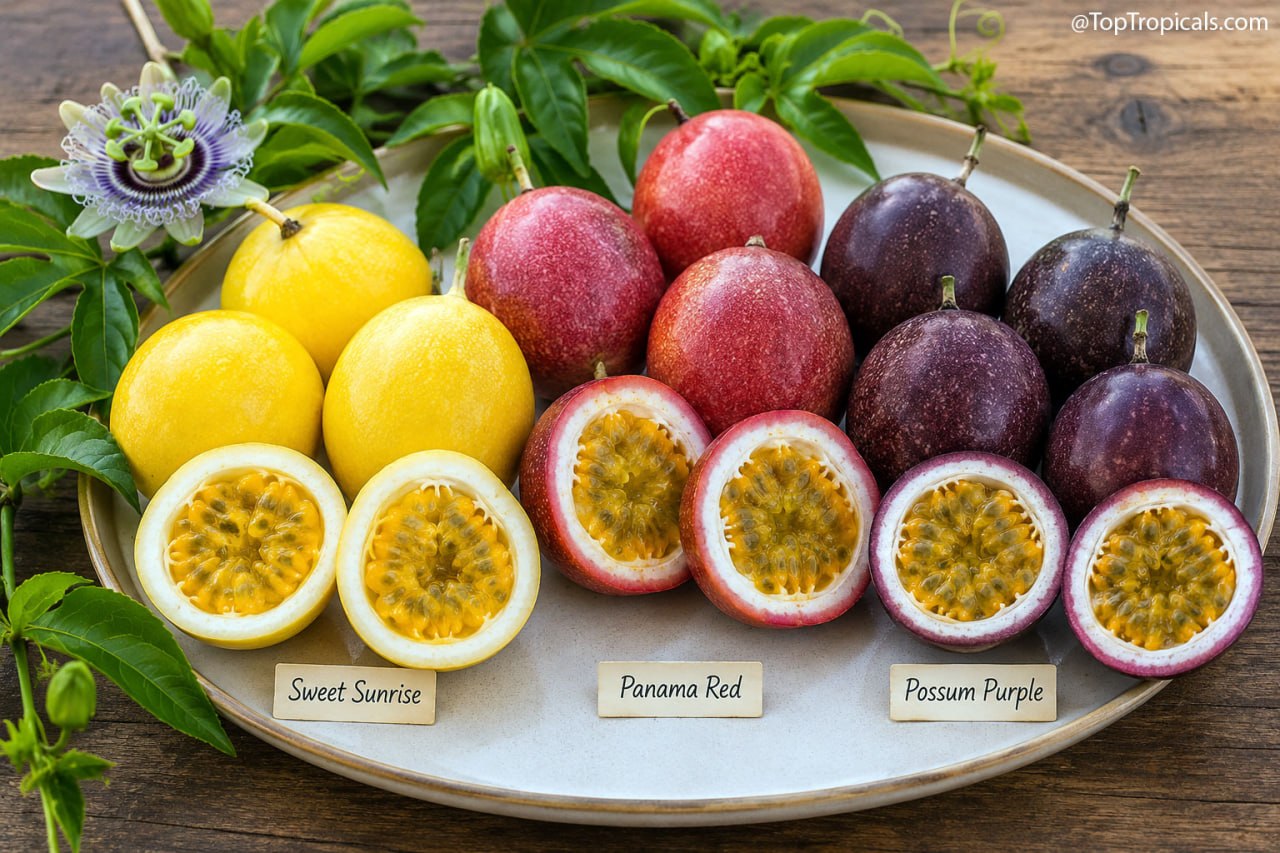
The fruit gradually grows and develops its characteristic mature color. Depending on the variety, ripe fruit may be purple, red, burgundy, or yellow.
Many varieties naturally drop from the vine when ripe.
Collect fallen fruit regularly and inspect the vine for additional mature fruit. Do not assume that fruit is ready simply because it has reached a particular size.
If your vine has only recently flowered, it may simply need more time before you can harvest.
15. How Much Passion Fruit Can One Vine Produce?
A healthy, well-managed passion fruit vine can produce a worthwhile harvest.
University of Florida IFAS Extension guidance indicates that a one-year-old vine may produce approximately 5 to 15 pounds of fruit under suitable conditions, although yields vary considerably.
The amount of fruit a vine produces depends on:
– Variety and plant age.
– Sunlight and growing conditions.
– Successful pollination.
– Water and nutrient availability.
– Pest and disease pressure.
– Winter survival and overall vine health.
For gardeners interested in selling fruit, record how much each vine produces and how much of the harvest is suitable for sale.
Consistent production and good fruit quality are more useful measures of success than the number of flowers alone.
16. A Simple Checklist for Getting More Passion Fruit
If your passion fruit vine is not producing as expected, use this checklist to identify what may need attention.
– [ ] The vine is mature enough to flower.
– [ ] The plant receives at least six hours of direct sunlight.
– [ ] The soil drains well.
– [ ] The root zone receives consistent moisture.
– [ ] Fertilizer is applied according to the plant’s needs.
– [ ] The vine is not receiving excessive nitrogen.
– [ ] The variety’s pollination requirements are understood.
– [ ] Pollinators can reach the flowers.
– [ ] Hand pollination is considered when needed.
– [ ] The trellis is sturdy and the vine is manageable.
– [ ] The plant is protected from severe cold.
– [ ] Pests and diseases are monitored regularly.
Addressing these factors systematically can help you identify the reason for poor fruit production without making unnecessary changes to the plant’s care.
Final Thoughts
Getting passion fruit to produce fruit is usually a matter of providing the right growing conditions and ensuring successful pollination.
Start with a suitable variety, give the vine plenty of sunlight, maintain consistent soil moisture, and avoid excessive nitrogen fertilizer. Most importantly, understand whether your plant is self-compatible or requires pollen from another compatible vine.
If flowers appear but fruit does not develop, hand pollination is an excellent technique to try. If the vine produces very few flowers, focus first on plant maturity, sunlight, nutrition, and overall health.
Central Florida’s long warm growing season offers good opportunities for passion fruit production, but winter freezes, sandy soils, and heavy summer rainfall require attention.
With a little observation and proper care, a vigorous passion fruit vine can reward gardeners with fragrant flowers and flavorful fruit for fresh eating, homemade desserts, juices, sauces, and potentially small-scale sales.
The secret to a productive passion fruit vine is simple: healthy growth, good pollination, and consistent care.
Recommended Resource
For more information about growing passion fruit in Florida, consult the University of Florida IFAS Extension guide:
The Passion Fruit in Florida
https://ask.ifas.ufl.edu/publication/HS1406
Leave a Reply