Passion fruit is one of the fastest-growing fruit-producing vines you can grow in Central Florida. With plenty of sunshine, well-drained soil, regular watering, and a sturdy trellis, a small nursery plant can develop into a long, vigorous vine in just a few months.
Unlike many tropical fruit trees that take several years to produce their first harvest, passion fruit can begin flowering and producing fruit within its first year under favorable conditions. The vine’s rapid growth makes it an appealing choice for backyard gardeners, tropical fruit enthusiasts, and small-scale growers interested in producing fruit relatively quickly.
But just how fast does passion fruit grow, and how long does it take before you can harvest your first fruit? Here’s what to expect when growing passion fruit in Central Florida.
1. How Fast Does Passion Fruit Grow?
Passion fruit is an exceptionally vigorous climbing vine. According to the University of Florida IFAS Extension, passion fruit vines can grow more than 35 feet in a single year under favorable conditions. Actual growth varies depending on the variety, weather, soil, watering, nutrition, and plant health.
During the warm Central Florida growing season, a healthy vine may grow several inches or more in a week. Growth can accelerate when temperatures are warm, sunlight is plentiful, and the roots have consistent access to moisture and nutrients.
A young plant may initially appear to grow slowly while establishing its roots. Once established, however, the vine can produce long shoots and tendrils that quickly climb a fence, arbor, or trellis.
The key takeaway: Passion fruit can grow rapidly enough to cover a properly designed support structure during its first growing season.
2. Passion Fruit Growth Timeline
The following timeline provides a general idea of how a passion fruit vine develops in Central Florida. These are estimates rather than guarantees, and growth may be slower during cool weather or when conditions are less favorable.
Weeks 1–4: Establishing Roots
After planting a healthy nursery-grown passion fruit vine, the plant begins adjusting to its new location and developing roots in the surrounding soil.
You may see new leaves and shoots during this period, although some plants spend much of their energy establishing roots before producing substantial aboveground growth.
To help the plant establish itself:
– Water thoroughly after planting.
– Keep the soil consistently moist without making it waterlogged.
– Provide plenty of sunlight.
– Protect the plant from strong winds.
– Avoid applying excessive fertilizer to newly planted roots.
A healthy plant should gradually begin producing new leaves and extending its main stem.
Months 2–3: Rapid Vine Growth
Once the roots become established, passion fruit growth can accelerate significantly.
New stems develop tendrils that wrap around nearby supports, allowing the plant to climb. During favorable weather, the vine may extend rapidly enough to require frequent training and redirection.
This is an excellent time to guide the main stem toward a trellis and encourage it to grow in the desired direction.
Regular watering is especially important in Central Florida because sandy soils can dry out quickly during warm, sunny weather.
Months 3–6: Climbing and Branching
By this stage, a healthy vine may have developed substantial length and several side shoots.
The plant begins creating the framework that will eventually support flowering and fruit production. If the vine reaches the top of its trellis, guide the new growth horizontally to encourage an organized canopy.
Depending on the variety and growing conditions, flowering may begin during this period, although some plants need considerably longer to mature.
Avoid assuming that a vine is failing simply because it has not flowered after a few months. Passion fruit needs to reach an appropriate stage of maturity before it produces flowers.
Months 6–12: Flowering and First Fruit
Under favorable conditions, passion fruit commonly begins flowering and producing fruit within its first year after planting.
In Central Florida, flowering typically occurs in spring, with fruit maturing during midsummer. The exact timing depends on when the vine was planted, its maturity, the variety, and local weather.
Successful pollination is essential. Flowers that are not pollinated will generally drop without developing into fruit.
Once a flower is successfully pollinated, the young fruit begins growing. According to UF/IFAS Extension, the period from flowering to harvest is generally about 70–75 days.
Year 2: Greater Production Potential
A vine that survives its first winter and remains healthy may produce a larger harvest during its second year.
The root system and trellis coverage are more established, and the vine may have many more productive shoots than it did during its first growing season.
However, fruit production depends on successful pollination, adequate sunlight, suitable nutrition, consistent moisture, and freedom from serious pests and diseases.
Central Florida gardeners should also remember that winter freezes can damage even established vines.
Years 3–4: Mature Production and Replacement Planning
Passion fruit vines are relatively short-lived compared with many fruit trees. UF/IFAS Extension reports that a productive vine typically lives about three to four years, although some plants may live longer.
Productivity may decline as vines become stressed by diseases, nematodes, root damage, or unfavorable weather.
Gardeners who want a continuous supply of fruit can consider starting replacement plants before their existing vines decline.
3. How Long Does It Take Passion Fruit to Produce Fruit?
One of the biggest advantages of growing passion fruit is its relatively short time to production.
Under favorable conditions, a passion fruit vine may begin flowering and producing fruit within approximately six months to one year after planting.
Some plants flower sooner, while others need a full year or longer to mature.
Several factors influence how quickly fruit production begins:
– Plant age: A mature nursery-grown plant may produce sooner than a small seedling.
– Variety: Different cultivars can vary in growth rate and flowering behavior.
– Sunlight: Vines need adequate direct sunlight to support flowering.
– Water: Drought stress can slow growth and reduce flowering.
– Nutrition: Balanced fertilization supports development, while excessive nitrogen may encourage leaves instead of flowers.
– Pollination: Flowers must be successfully pollinated before they can produce fruit.
– Temperature: Cold weather can slow growth, damage foliage, and delay flowering.
For the best chance of an early harvest, start with a healthy nursery plant suited to Florida’s climate and give it favorable growing conditions from the beginning.
4. How Long Does Passion Fruit Take to Ripen?
Once a flower has been successfully pollinated, passion fruit generally needs approximately 70–75 days to mature.
During this period, the fruit grows from a small green ovary into a larger fruit with its characteristic mature skin color.
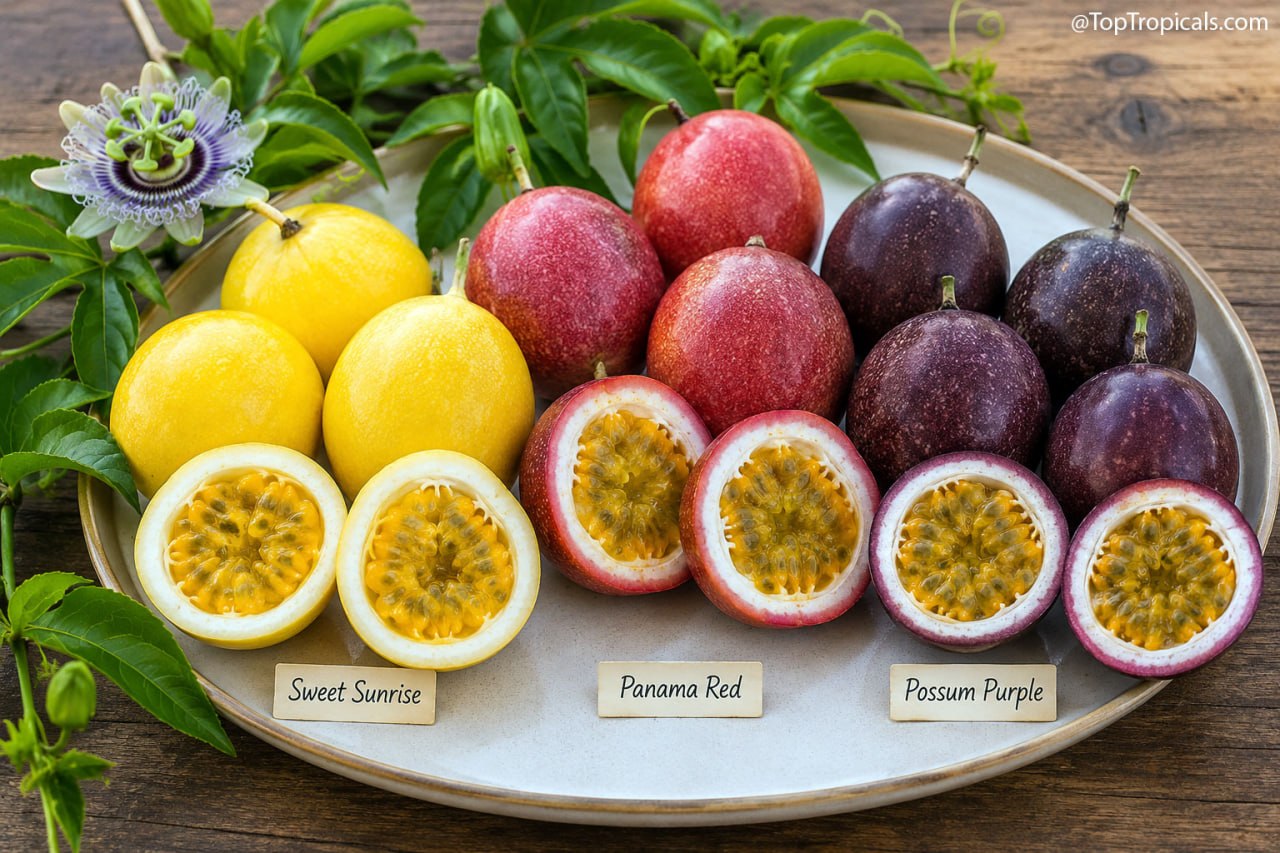
Depending on the variety, mature fruit may turn purple, burgundy, red, or yellow.
As the fruit ripens, its aroma and flavor develop. Many varieties naturally detach from the vine when fully ripe.
Collect fallen fruit regularly to maintain quality and prevent it from sitting on wet ground or being damaged by pests.
Do not confuse the time required for the vine to mature with the time required for an individual fruit to ripen. The vine may need months to reach flowering maturity, followed by roughly another two and a half months from pollination to harvest.
5. How to Make Passion Fruit Grow Faster
If you want your passion fruit vine to grow quickly and begin producing fruit as soon as reasonably possible, focus on the conditions that encourage healthy growth.
Provide Plenty of Sunlight
Choose a location that receives at least six hours of direct sunlight daily, preferably more.
Sunlight provides the energy the vine needs to produce new leaves, stems, flowers, and fruit.
Vines growing in excessive shade may develop poorly, drop leaves, or produce fewer flowers.
Plant in Well-Drained Soil
Passion fruit has relatively shallow roots and does not tolerate prolonged waterlogging well.
Many Central Florida properties have sandy soil that drains quickly. This can be beneficial for root health, but sandy soil may also dry out rapidly.
Improve the planting area appropriately and avoid locations where water remains standing after heavy rainfall.
Water Consistently
A young passion fruit vine needs reliable moisture while its roots become established.
Check soil moisture regularly, especially during hot weather and dry periods. Water thoroughly when needed rather than allowing the root zone to dry out repeatedly.
At the same time, avoid keeping the soil continuously saturated.
Drip irrigation can be particularly useful for maintaining consistent moisture without unnecessarily wetting the foliage.
Fertilize Carefully
Passion fruit needs adequate nutrients to develop healthy roots and vigorous shoots.
Use a suitable fertilizer according to soil-test results, the plant’s growth stage, and the product label.
During the first year, fertilization should support root and vine development. Once the plant matures, excessive nitrogen should be avoided because it can promote leafy growth at the expense of flowering.
More fertilizer does not automatically mean faster fruit production.
Install a Strong Trellis
Passion fruit vines need room to climb. A sturdy trellis, fence, or arbor allows the plant to spread and develop a productive canopy.
Install the support before the vine becomes large. Train the main stem upward and encourage side branches to spread across the structure.
Regularly redirect unwanted shoots to prevent the vine from becoming tangled.
Encourage Pollination
A vine may grow vigorously without producing much fruit if its flowers are not adequately pollinated.
Large carpenter bees are important pollinators in many parts of Central Florida.
If flowers open but fruit does not develop, check the variety’s pollination requirements. Hand pollination with a clean, soft paintbrush may help, especially if natural pollinator activity is low.
Some varieties are self-compatible, while others need pollen from a genetically different compatible vine.
6. Does Passion Fruit Grow Year-Round in Central Florida?
Passion fruit can grow vigorously during Central Florida’s warm months, but its growth is affected by seasonal temperatures.
Spring and summer generally provide favorable conditions for rapid vine development. Growth may slow during cooler weather, particularly when temperatures fall substantially.
Winter freezes present a more serious concern. Passion fruit is a tropical and subtropical vine, and a severe freeze can kill its aboveground growth.
To improve the chances of year-to-year survival:
– Plant in a protected location.
– Avoid low spots where cold air collects.
– Use frost cloth during freezing weather.
– Keep the root zone mulched without piling mulch against the stem.
– Inspect the plant for cold damage before pruning heavily after a freeze.
Yellow passion fruit and many purple-yellow hybrids are generally better adapted to warmer, low-elevation conditions than traditional purple passion fruit, but variety selection alone does not eliminate the risk of winter damage.
7. How Much Fruit Can a Fast-Growing Vine Produce?
Rapid vine growth does not necessarily mean an immediate large harvest. Fruit production depends on the plant reaching maturity and receiving successful pollination.
According to UF/IFAS Extension, a one-year-old passion fruit vine may produce approximately 5–15 pounds of fruit under suitable growing conditions.
Actual yields vary with the cultivar, climate, irrigation, pollination, nutrition, pests, and disease pressure.
A vine that grows many feet in a season but produces few flowers may need more sunlight, different fertilizer management, or improved pollination.
For gardeners considering small-scale fruit sales, keeping records of flowering dates, harvest weights, and plant health can help identify which varieties perform best locally.
8. Common Reasons Passion Fruit Grows Slowly
If your passion fruit vine is not growing as quickly as expected, look for the following problems.
Too little sunlight: Shaded vines often grow and flower poorly.
Irregular watering: Repeated drought stress can slow growth and damage shallow roots.
Poor drainage: Waterlogged soil can cause root damage and reduce vigor.
Nutrient deficiencies: Sandy soil may not provide enough nutrients for rapid growth without appropriate fertilization.
Excessive nitrogen: Too much nitrogen can produce abundant foliage without encouraging flowering.
Cold damage: Low temperatures can injure young plants and temporarily stop growth.
Pests and diseases: Nematodes, mites, root diseases, and other problems can weaken vines.
A young or stressed plant: Some plants simply need more time to establish their root systems.
Before adding fertilizer or water, examine the plant and soil to identify the likely cause of slow growth.
9. Is Passion Fruit One of the Fastest Fruit Plants to Grow in Florida?
Passion fruit is among the fastest-growing fruit-producing plants suitable for many Central Florida gardens.
Its vigorous climbing habit allows it to cover a trellis or fence much faster than most fruit trees can develop a productive canopy.
Its potential to flower and produce fruit within the first year also makes it appealing to gardeners who want a relatively quick harvest.
However, rapid growth comes with responsibilities. Passion fruit needs sturdy support, regular training, careful watering, and ongoing inspection for pests and diseases.
The vine’s relatively short productive lifespan also means that replacement planting may eventually be necessary.
For gardeners who enjoy hands-on growing and want to make productive use of vertical space, passion fruit is an excellent plant to consider.
Final Thoughts
Passion fruit grows remarkably fast under favorable conditions. A healthy vine can extend more than 35 feet in a year, and many plants begin flowering and producing fruit within their first year after planting.
In Central Florida, the best results generally come from planting in spring, providing plenty of sunlight, maintaining consistent soil moisture, using well-drained soil, and supporting the vine on a sturdy trellis.
Remember that rapid growth and fruit production are not exactly the same thing. A vine needs to mature, develop flowers, and receive successful pollination before it can deliver a harvest.
With the right variety and proper care, passion fruit can reward Central Florida gardeners with vigorous growth, beautiful flowers, and flavorful tropical fruit in a relatively short time.
Recommended Resource
For additional growing information, consult the University of Florida IFAS Extension guide:
The Passion Fruit in Florida
https://ask.ifas.ufl.edu/publication/HS1406
Leave a Reply