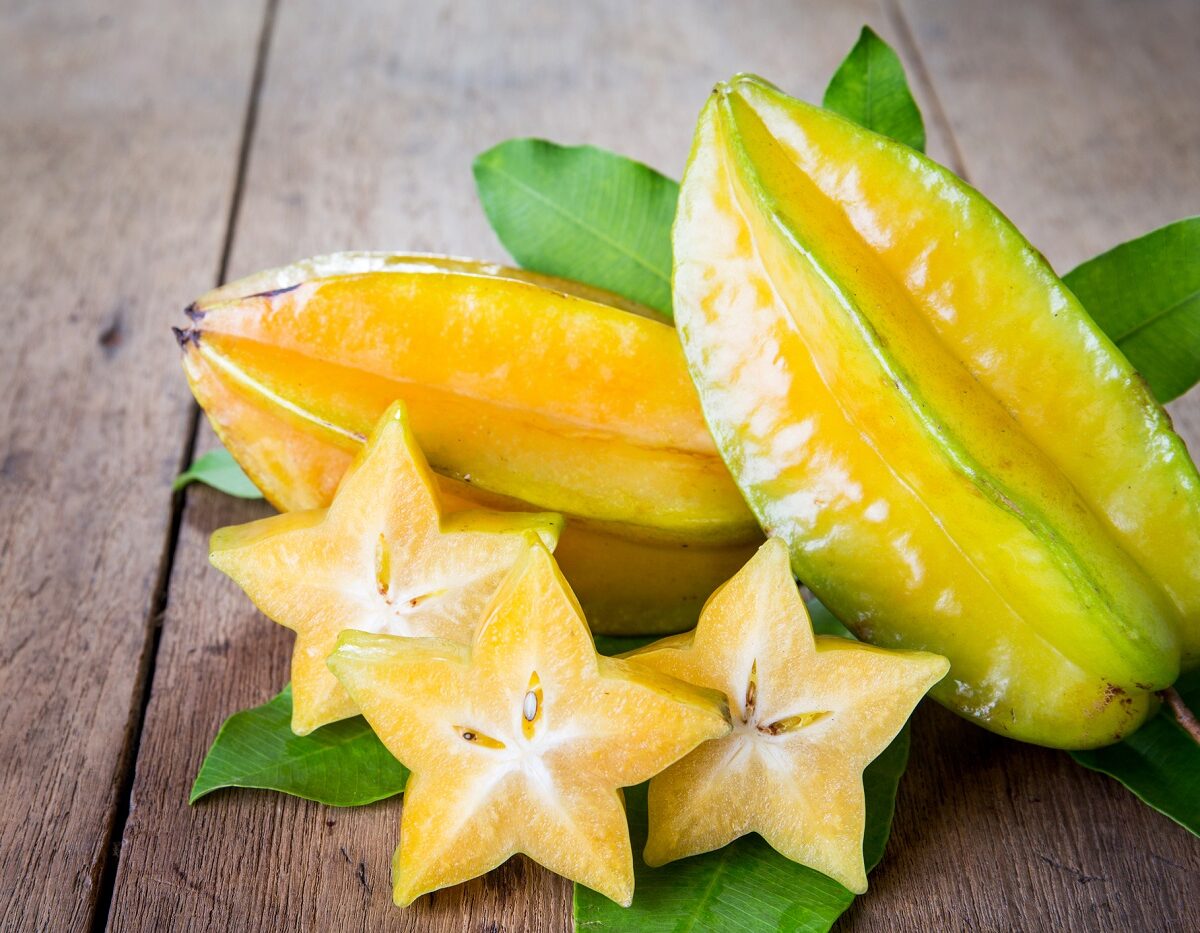

Star fruit, also called carambola, is one of the most interesting tropical fruit trees you can grow in Florida. When sliced crosswise, the fruit produces a beautiful five-pointed star shape, making it popular for fresh eating, salads, desserts, drinks, sauces and garnishes.
For Central Florida growers, star fruit can be especially interesting because a healthy, well-managed tree can begin producing relatively quickly and mature trees can produce substantial crops. However, carambola is sensitive to cold, drought, wind and certain soil conditions, so choosing the right location is extremely important.
With the right variety, good drainage, regular irrigation, protection from strong winds and a plan for occasional freezes, star fruit can become a productive backyard fruit tree.
Can You Grow Star Fruit in Central Florida?
Yes—but location matters.
UF/IFAS identifies protected areas of Central Florida, including parts of Brevard, Pinellas, Highlands and Polk Counties, as areas where carambola can be grown. Warm locations and protection from freezing temperatures are particularly important.
For a Central Florida backyard grower, look for:
– Full sun
– A warm location
– Protection from strong winds
– Well-drained soil
– Reliable irrigation
– Protection from occasional freezes
– Enough room to prune the tree to a manageable size
A protected microclimate near the warmer side of a property can make a significant difference.
Star fruit is not a tree I would plant in the coldest, most exposed portion of a Central Florida property.
What Is Star Fruit?
Star fruit is the fruit of Averrhoa carambola, a tropical and warm-subtropical tree originally from Southeast Asia.
The tree is evergreen in warm conditions and develops a spreading canopy. Mature trees can become approximately 22–33 feet tall and 20–25 feet wide if allowed to grow naturally, although regular pruning can keep a backyard tree much smaller.
The fruit is usually yellow or golden when ripe, with five prominent ribs. The flesh is crisp, juicy and generally sweet or mildly tart depending on the cultivar.
The fruit normally contains relatively few seeds, and some fruit may contain none.
Why Grow Star Fruit?
There are several reasons carambola is attractive to Florida home growers.
Beautiful fruit
Few backyard fruits are as visually distinctive as a ripe star fruit.
Fast production
Under favorable conditions, wind-protected trees may begin producing fruit approximately 10–14 months after planting.
High production potential
UF/IFAS reports approximately:
– 10–40 pounds per tree during the first two to three years
– 100–150 pounds per tree by years five and six
– 250–350 pounds or more from mature 7–12-year-old trees under favorable conditions
These are reference production figures, not guarantees for an individual Central Florida tree.
Versatile fruit
Star fruit can be eaten fresh or used in:
– Fruit salads
– Salsas
– Sauces
– Desserts
– Drinks
– Jellies
– Pickles
– Garnishes
– Seafood dishes
– Meat dishes
That versatility can also create opportunities for a backyard grower who wants to sell directly to local customers.
Star Fruit Varieties for Florida
Choosing the right cultivar is one of the most important decisions you can make.
UF/IFAS identifies several cultivars suitable for home landscapes under Florida conditions. Recommended selections include:
Arkin
A Florida selection known for good quality and flavor. Arkin is one of the better-known sweet carambola cultivars.
Fwang Tung
A Thai cultivar noted by UF/IFAS for very good flavor.
Kary
A Hawaiian cultivar known for very good fruit quality and flavor.
Sri Kembangan
A Malaysian cultivar producing large fruit with good flavor.
Kajang
Another cultivar recommended by UF/IFAS for home landscapes.
Lara
A Florida selection with good quality and flavor.
Availability varies considerably from nursery to nursery, so the best cultivar may depend partly on what you can obtain from a reputable Florida nursery.
UF/IFAS lists Arkin, Fwang Tung, Kary, Kajang, Lara and Sri Kembangan among cultivars recommended for home landscape planting.
Sweet vs. Tart Star Fruit
Carambola varieties can generally be divided into sweet and tart types.
For fresh eating, sweet cultivars are usually the most desirable.
Tart cultivars can also be useful for cooking and processing. Some tart cultivars, including Golden Star, can become considerably sweeter when allowed to ripen fully on the tree.
If your primary goal is fresh fruit or direct sales, pay particular attention to the eating quality of the cultivar you purchase.
How Do You Choose a Star Fruit Tree?
Whenever possible, buy a named grafted tree rather than an unidentified seedling.
A grafted tree gives you a much better idea of what type of fruit you will eventually produce.
When purchasing a tree:
– Choose a healthy plant with vigorous growth.
– Look for a known cultivar.
– Avoid severely root-bound plants.
– Inspect the trunk for damage.
– Check leaves and branches for obvious pest problems.
– Buy from a reputable nursery when possible.
UF/IFAS notes that carambola cultivars are generally propagated by grafting onto seedling rootstocks.
Where Should You Plant a Star Fruit Tree?
Location may be more important than fertilizer.
Choose the warmest practical location on your property.
Full sun
Star fruit performs best in full sun.
Avoid locations shaded by large trees or buildings.
Wind protection
This is particularly important in Florida.
Carambola is intolerant of constant strong winds. Wind can cause leaf damage, fruit scarring, reduced fruit size and reduced production.
A fence, building, hedge or other windbreak can help.
Do not completely surround the tree with dense vegetation, however. The tree still needs good sunlight and airflow.
Avoid cold pockets
Do not automatically plant the tree in the lowest part of your property where cold air can collect.
A slightly elevated, protected location can be preferable during a freeze.
How Far Apart Should You Plant Star Fruit Trees?
UF/IFAS recommends planting carambola approximately 20–30 feet or more from buildings and other trees when the tree is allowed to grow naturally.
For a backyard production system, however, regular pruning can keep the tree considerably smaller.
A well-maintained tree can be kept around 6–12 feet tall, making harvesting and maintenance much easier.
Do not plant the tree where you will eventually be forced to let it grow into power lines or structures.
How to Plant a Star Fruit Tree
Choose a healthy nursery tree and plant it during a period when you can provide regular irrigation while it becomes established.
Step 1: Clear the planting area
Remove grass and weeds from a broad area around the planting site.
Step 2: Dig the hole
In Florida sandy soil, UF/IFAS recommends digging a planting hole approximately three to four times the diameter and about three times the depth of the container.
Step 3: Position the tree
Set the tree so the top of the original container soil is level with or slightly above the surrounding ground.
Step 4: Backfill
Use the excavated native soil to backfill around the root ball.
Do not create a small pocket of rich soil or compost around the roots.
Step 5: Water thoroughly
Water immediately after planting.
Step 6: Mulch
Apply approximately 2–6 inches of mulch around the tree.
Keep mulch approximately 8–12 inches away from the trunk.
Can You Grow Star Fruit From Seed?
Yes, but seed is not the best choice if your goal is a predictable fruit tree.
Seedlings can be useful for experimentation or for producing rootstock, but a seed-grown tree may not give you fruit identical to the parent tree.
Fresh seed is important because carambola seeds lose viability quickly after removal from the fruit.
For a production-oriented backyard orchard, a named grafted tree is generally a more predictable starting point.
Can Star Fruit Be Grown From Cuttings?
Carambola is normally propagated commercially through grafting and budding rather than relying on simple cuttings.
UF/IFAS reports good results with veneer grafting and chip budding during active growth.
Air-layering has not been particularly successful because of poor root development.
If you want a known cultivar, purchasing a grafted tree is usually much easier than trying to reproduce it yourself.
How Long Does It Take for Star Fruit to Produce Fruit?
Star fruit can be relatively fast compared with many tropical fruit trees.
UF/IFAS reports that carambola grown in wind-protected conditions may begin producing fruit approximately 10–14 months after planting.
Actual production time depends on:
– Tree size when planted
– Cultivar
– Whether the tree is grafted
– Temperature
– Sunlight
– Water
– Fertility
– Wind exposure
– Freeze damage
– Overall tree health
A small newly planted tree should not be expected to immediately produce a large commercial crop.
How Can You Encourage Earlier Star Fruit Production?
The biggest priorities are:
1. Start with a healthy grafted tree.
2. Give it full sun.
3. Protect it from constant wind.
4. Maintain adequate moisture.
5. Avoid severe nutrient deficiencies.
6. Protect young trees from freezes.
7. Prune correctly.
8. Do not allow the tree to become excessively large and shaded.
Carambola has an unusual ability to flower on mature shoots repeatedly.
UF/IFAS notes that shoots can gain the ability to flower at approximately three months of age. Certain pruning techniques can be used to encourage additional flowering and off-season production.
Fertilizing Star Fruit Trees
Carambola is a relatively heavy feeder, particularly as the tree becomes larger and more productive.
UF/IFAS recommends a complete fertilizer containing nitrogen, phosphorus, potassium and magnesium.
For young trees, approximately ¼–½ pound per application every 30–60 days is recommended in the UF/IFAS home-landscape guidance.
As trees mature, fertilizer amounts increase and applications become less frequent.
A practical Central Florida approach is to:
– Use a complete fruit-tree fertilizer.
– Follow the fertilizer label.
– Apply smaller amounts more frequently to young trees.
– Increase feeding as the tree grows.
– Monitor the leaves for nutrient deficiencies.
– Avoid excessive nitrogen.
Watch the soil pH
Carambola generally performs best in moderately acidic to neutral soils, approximately pH 4.5–7.
When soil pH is above 7, iron, manganese and magnesium deficiencies become more common.
This can be particularly important when growing fruit trees in Florida’s higher-pH soils.
Watering Star Fruit Trees
Star fruit does not tolerate prolonged drought particularly well.
Dry conditions can cause:
– Leaf folding
– Wilting
– Yellowing
– Leaf drop
– Reduced flowering
– Smaller fruit
– Branch dieback
– Reduced production
UF/IFAS recommends regular irrigation for young trees and regular watering from flowering through harvest once trees begin producing.
The goal is consistent moisture without keeping the root zone constantly saturated.
Can Star Fruit Handle Wet Florida Soil?
Carambola has some tolerance of temporary flooding, but that does not mean it should be planted in permanently wet soil.
Prolonged excessive moisture can contribute to root problems and decline.
If your property has a low area that regularly stays wet after summer storms, consider planting on a raised mound rather than directly in the low spot.
Pruning Star Fruit Trees
Pruning is one of the most useful tools for a backyard star fruit grower.
Instead of allowing the tree to become a 25-foot-plus problem, maintain a manageable production tree.
Young trees
During the first one to two years, tipping excessively long shoots can encourage branching.
Mature trees
UF/IFAS recommends selectively pruning mature trees to approximately 6–12 feet when practical.
A smaller tree provides several advantages:
– Easier harvesting
– Easier pest monitoring
– Easier freeze protection
– Easier pruning
– Less storm damage
– Better access to fruit
Do not remove all the lower branches. Much of the fruit-producing canopy is relatively low on the mature tree.
Can Pruning Increase Star Fruit Production?
Yes.
Carambola is unusual because certain mature shoots can repeatedly flower.
UF/IFAS describes pruning techniques that can stimulate flowering and off-season production. Pruning or manipulating selected shoots can result in flowering within several weeks and fruit approximately 70–80 days later under suitable conditions.
This is one of the more interesting characteristics of carambola for a backyard grower interested in extending the harvest season.
Do not aggressively prune a weak or severely stressed tree. Build a healthy canopy first.
Star Fruit Flowering
Carambola flowers are small and pink to lavender and are produced in clusters called panicles.
South Florida commonly experiences major flowering periods in spring and fall, although flowers can occur at other times of the year.
Central Florida timing can vary with temperature, rainfall, pruning and winter conditions.
Does Star Fruit Need Two Trees for Pollination?
Not necessarily.
This is an important detail.
Carambola varieties can have different flower styles, a condition known as heterostyly.
Some cultivars can produce good crops by themselves, while other cultivars may produce more fruit when cross-pollinated with a compatible cultivar.
UF/IFAS specifically notes that Arkin and Fwang Tung can produce abundant crops without requiring an opposing style type, while B-10 and B-17 can benefit from cross-pollination.
If you are planting several trees, growing compatible cultivars can therefore be useful.
How Does Star Fruit Develop?
After successful fruit set, the fruit develops along the branches.
Depending on variety, weather and growing conditions, fruit generally takes approximately 60–75 days from fruit set to maturity.
During fruit development, consistent irrigation is particularly important.
Should You Thin Star Fruit?
For a young tree carrying more fruit than its canopy can comfortably support, removing some fruit can help reduce stress.
Thinning can also be useful when the goal is to encourage tree growth rather than maximize the first small crop.
As the tree becomes established, allow the canopy and root system to determine how much fruit the tree can comfortably carry.
Protecting Star Fruit From Florida Freezes
This is one of the most important sections for Central Florida growers.
Carambola is a tropical/warm-subtropical tree and is vulnerable to freezing temperatures.
UF/IFAS reports:
– 30–32°F: young leaves can be killed
– 27–29°F: young trees, twigs and mature leaves may be killed
– 25–29°F: small branches may be damaged
– 20–24°F: large branches and mature trees may be killed
The exact damage depends on duration, tree age, wind, moisture and other conditions.
Protecting a young tree
When a freeze is forecast:
– Cover small trees with frost cloth or appropriate fabric.
– Do not allow plastic to rest directly against foliage.
– Cover before temperatures fall.
– Remove coverings when temperatures recover.
– Watering the soil before a freeze can help moderate temperature around the root zone when appropriate.
– Avoid fertilizing heavily immediately before a predicted freeze.
The best long-term protection is still location.
A tree planted in a warm, protected microclimate has a better chance than one exposed to radiational cooling and strong wind.
Common Star Fruit Problems
Yellow leaves
Possible causes include:
– Nutrient deficiency
– High soil pH
– Excessive moisture
– Root problems
– Drought stress
Leaf drop
Possible causes include:
– Cold
– Drought
– Excessive wetness
– Root problems
– Environmental stress
Small fruit
Possible causes include:
– Insufficient water
– Nutrient deficiencies
– Excessive crop load
– Poor growing conditions
– Wind damage
Fruit scarring
Constant wind can rub and damage developing fruit.
Wind protection is therefore important not only for the tree but also for fruit quality.
Star Fruit Pests
Carambola can be affected by several pests, including:
– Scale insects
– Diaprepes weevils
– Stink bugs
– Squash bugs
– Thrips
– Fruit blotch miners
– Other occasional insects
Birds, raccoons and opossums can also damage fruit.
UF/IFAS recommends regular monitoring rather than waiting until severe damage occurs.
Star Fruit Diseases
Potential disease problems include:
– Leaf spot
– Red alga
– Anthracnose
– Fruit rots
– Root rot
Healthy trees with good nutrition, appropriate irrigation and good site conditions generally have fewer problems.
Avoid keeping the root zone excessively wet, and remove severely damaged or diseased material when appropriate.
Growing Star Fruit in Containers
Star fruit can be grown in a large container, particularly when the goal is to maintain a smaller tree.
Container growing can be useful for:
– Cold-prone properties
– Patios
– Small yards
– Growers who want greater control over tree size
– Moving a young tree to a protected location during unusual cold
A container-grown tree still needs:
– Full sun
– Good drainage
– Regular watering
– Regular fertilization
– Root-space management
– Cold protection
Do not allow the container to remain waterlogged.
When Is Star Fruit Ready to Harvest?
Star fruit does not continue increasing in sugar after it is picked, so harvest timing matters.
For better sweetness, UF/IFAS recommends harvesting when the fruit begins turning yellow in the grooves between the ribs while the tips of the ribs remain green.
If you want a sweeter fruit for fresh eating, allowing it to approach full ripeness on the tree generally produces better flavor.
How to Harvest Star Fruit
Use clean pruning shears or scissors when necessary rather than pulling aggressively on the fruit.
Handle ripe fruit carefully because the skin is delicate.
Sort fruit immediately into:
– Fresh eating
– Direct sales
– Cooking/processing
– Damaged or unsuitable fruit
This becomes increasingly important if you are growing enough fruit to sell.
How Should Star Fruit Be Stored?
Fresh carambola can be refrigerated.
UF/IFAS reports that fruit can be stored in plastic bags for approximately 21 days in the refrigerator under suitable conditions.
For the best eating quality, however, freshly harvested fruit is hard to beat.
How Much Fruit Can a Star Fruit Tree Produce?
This is where star fruit becomes particularly interesting for a backyard grower.
UF/IFAS reports:
Tree age| Approximate production
First 2–3 years| 10–40 lb/tree/year
Years 5–6| 100–150 lb/tree/year
Years 7–12| 250–350+ lb/tree/year
These figures represent Florida reference conditions and should not be treated as a guaranteed Central Florida yield.
Actual production depends heavily on cultivar, weather, cold damage, pruning, irrigation, fertility, wind protection and tree health.
Is Growing Star Fruit Profitable?
It can be, but profitability depends on how and where you sell the fruit.
UF/IFAS has published a specific economic analysis of sweet carambola production in South Florida, reflecting the fact that carambola is already an established specialty fruit crop in Florida.
For a Central Florida backyard grower, the economics are different from a commercial South Florida farm.
Your potential advantages can include:
– Small-scale production
– Direct sales
– Local customers
– Farmers markets
– Specialty fruit buyers
– Restaurants and chefs
– Selling freshly harvested fruit
– Multiple uses for imperfect fruit
Your biggest challenge is finding customers willing to pay for fresh local star fruit.
A backyard grower should calculate profit using actual local selling prices and actual production, rather than assuming retail grocery-store prices equal what a grower can receive.
For detailed Central Florida numbers, see our dedicated:
Is Star Fruit Profitable?
Selling Homegrown Star Fruit
If your tree begins producing more fruit than your household can use, consider building a local customer base before the crop becomes large.
Potential customers include:
– Friends and neighbors
– Local fruit enthusiasts
– Farmers markets
– Small restaurants
– Cocktail bars
– Chefs
– Specialty produce buyers
– Local Facebook gardening/fruit groups where permitted
The unusual star shape is itself a marketing advantage.
You can sell the fruit as:
Fresh Florida Star Fruit
or
Locally Grown Carambola
Rather than competing directly with inexpensive commodity fruit, a small grower can focus on freshness, local origin and specialty varieties.
Always check applicable Florida and local rules before selling homegrown produce.
Star Fruit Recipes
Star fruit is extremely versatile in the kitchen.
It can be used in:
– Fresh fruit salads
– Salsas
– Seafood dishes
– Steak sauces
– Chicken dishes
– Desserts
– Cocktails
– Jams and jellies
– Pickles
– Garnishes
At Arbuckle Creek, we use star fruit in both savory and sweet recipes, including seafood and steak dishes.
Explore our Star Fruit Recipes

Important Food Safety Note About Star Fruit
0an important medical caution associated with carambola.
UF/IFAS advises that people who have been diagnosed with kidney disease should not eat star fruit unless their doctor says it is safe, because carambola can contain enough oxalic acid to cause a rapid decline in renal function.
This warning is important enough to remember whenever recommending star fruit as a food.
Frequently Asked Questions
Can star fruit grow in Central Florida?
Yes. UF/IFAS identifies protected areas of Central Florida where carambola can be grown, although cold protection and site selection are important.
What is the best star fruit variety for Florida?
UF/IFAS recommends several cultivars for home landscapes, including Arkin, Fwang Tung, Kary, Kajang, Lara and Sri Kembangan.
How fast does star fruit produce?
Under favorable, wind-protected conditions, trees may begin producing fruit approximately 10–14 months after planting.
Does star fruit need two trees?
Not always. Some cultivars can produce abundant crops on their own, while others benefit from cross-pollination with a compatible cultivar.
How cold hardy is star fruit?
It is relatively cold sensitive. Young leaves can be damaged around 30–32°F, while more serious damage occurs at lower temperatures.
How big does a star fruit tree get?
An unpruned tree can reach roughly 22–33 feet tall and 20–25 feet wide, but regular pruning can maintain a backyard tree at approximately 6–12 feet.
How much fruit can a mature star fruit tree produce?
Under favorable conditions, UF/IFAS reports approximately 250–350 pounds or more per year from mature 7–12-year-old trees. Individual trees can produce substantially less or more depending on conditions.
Can star fruit be grown in a pot?
Yes. A large container can be used to keep a tree smaller and make cold protection easier.
Does star fruit like wet soil?
It tolerates some temporary wet conditions, but prolonged excessive moisture can cause root problems and decline. Good drainage remains important.
When should star fruit be picked?
For good sweetness, harvest when the fruit begins turning yellow between the ribs while the rib tips remain green.
Keep Growing With Arbuckle Creek
Star fruit is one of those unusual fruit trees that can be both beautiful and productive.
For Central Florida growers, the key is not simply planting a tree and hoping for the best. Choose the right cultivar, give it plenty of sun, protect it from wind and freezes, maintain consistent moisture, prune it to a manageable size and harvest the fruit at the right stage.
With good care, a single backyard carambola tree can eventually produce a surprisingly large harvest.
Explore more Arbuckle Creek growing guides, profitability information and tropical fruit recipes.
Related articles